
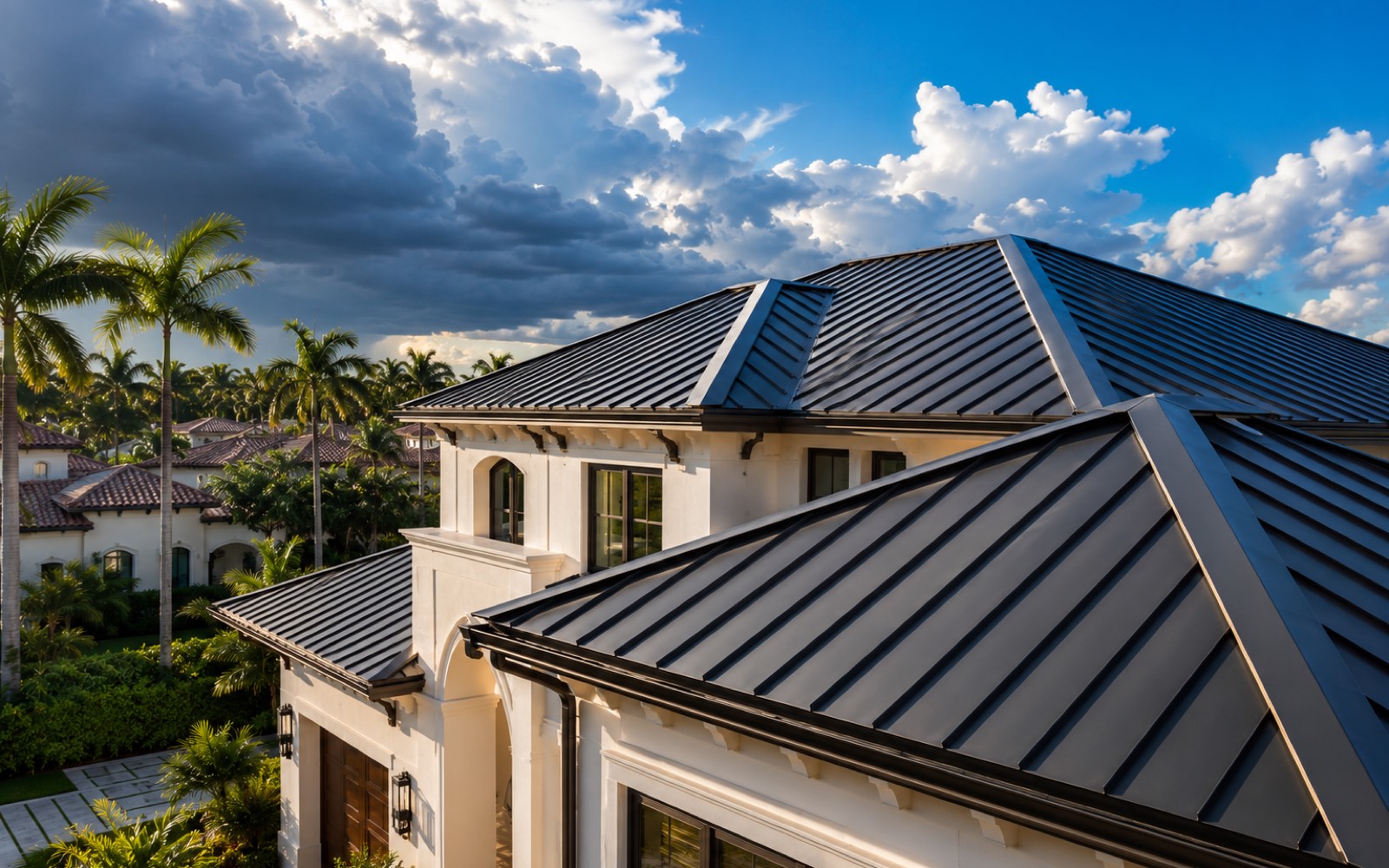
Technical guide · how a roof resists wind
Hurricane Roofing in Miami
A roof does not fail because the wind is strong. It fails because the wind finds a loose edge. Here is what each layer of the system does, and where the damage actually starts.
How wind takes a roof off
Understanding the mechanism makes it obvious why the code concentrates where it does.
Wind passing over a roof accelerates and creates suction — negative pressure — above the surface. That suction is not uniform: it is far higher at the corners and along the edges than in the middle of a slope. Which is exactly why fastening requirements are strictest around the perimeter.
The typical failure is progressive. Wind finds an edge it can lift: a poorly fastened drip edge, a first course of shingles whose sealant has degraded, a loose eave tile. It lifts that piece, gets underneath, and from there works against the underside of the covering — where no system is designed to resist. The peel travels inward.
The second mechanism is internal. If a window or a door gives way, pressure inside the house rises sharply and pushes up on the roof while the wind pulls down from above. That is why protecting openings is part of how a roof performs, even though it is not part of the roof.
The system, layer by layer
Bottom to top. Each layer has a different job, and the order matters.
-
The deck
The structural wood everything else sits on. If it is rotten or delaminated from an old leak, no fastener holds. That is why a serious replacement starts by stripping to the deck and inspecting it board by board.
-
Deck attachment
How the deck is nailed to the trusses. One of the highest-impact upgrades and one of the least visible: re-nailing a deck with the right pattern and the right fastener changes its behaviour entirely, and it is one of the features insurers credit.
-
The secondary water barrier
A self-adhered membrane over the sealed deck. Its job is specific: if the covering goes, this layer still keeps water out of the house. It is what separates losing a roof from losing the interior too.
-
The underlayment
The waterproof layer the covering is installed over. In the HVHZ it needs a current approval for that application, exactly like the visible material does.
-
The edge metal
The perimeter: drip edge and terminations. It is the first piece wind tries to lift and, in practice, where most failures begin. Its fastening matters as much as the covering’s.
-
The covering
Tile, shingle or metal. It is what you see and the least decisive part of the outcome, provided it is installed with the fastening its own product approval requires.
-
The connection to the structure
The hardware tying the roof to the walls. A perfectly built roof that is not strapped to the house is a roof that can leave in one piece.
The roof-to-wall connection
It is the only item on that list you never see from outside, and the one that weighs most on how the whole house behaves. Connections range from a simple toe-nail in older construction to clips and metal straps that wrap the truss and tie it into the wall.
In houses of a certain age this connection is usually the weakest link in the assembly. It can be reinforced, and it is normally cheaper and more effective than almost any other upgrade at the same budget. When a roof is opened for replacement, that is the best — and sometimes the only reasonable — moment to reach it.
How we handle strap reinforcement →Which categories the mitigation inspection looks at →
Why your windows are part of your roof
As long as the building envelope stays closed, internal pressure stays steady and the roof only fights the suction outside. The moment debris breaks a windward window, air enters under pressure and pushes upward from inside, adding to the suction pulling from above.
Which is why a new roof and unprotected openings are a worse combination than they look: the link that fails is not the one that was strengthened.
How each material behaves
None is immune and none is bad by definition. What changes is where its weak point sits.
| System | What makes it hold | Where its weak point is |
|---|---|---|
| Standing-seam metal | Concealed fastening, no penetrations exposed to weather; long continuous panels. | Perimeter terminations and details at penetrations, if executed poorly. |
| Concrete or clay tile | Its own weight and, installed properly, mechanical attachment piece by piece. | A loose tile becomes debris. Eave and ridge attachment is critical. |
| Architectural shingle | Sealant strips bonding each course to the one below, plus the nailing pattern. | Sealant degrades under UV; on an older roof the first course is the entry point. |
| Flat and low-slope | A continuous membrane, adhered or mechanically fastened, with no loose pieces. | Edges and vertical terminations — and standing water, which is not wind but ends the same way. |
Real behaviour depends on the complete system installed to its approval, not on the name of the material. Two tile roofs with different attachment are not the same roof.
What wind ratings actually mean
The wind figures that appear in advertising are easy to misread. A product does not have one universal wind speed: it has approvals for design pressures in specific applications — a pitch, a deck type, a zone of the roof, a particular fastening pattern.
So the useful question is not "how many miles per hour will it take?" but "what is this system’s approval number, and does it cover my application?". That number is public, and you can check it yourself.
Miami-Dade NOA search →Florida Product Approval →How product approval works in Miami-Dade →
The wind-mitigation report
Florida law requires insurers to offer discounts for verified features that reduce wind loss. The mitigation report is the document that evidences them: deck attachment, roof-to-wall connection type, roof geometry, secondary water barrier and opening protection.
Several of those categories are decided while the roof is being built, not afterwards. That is the practical reason to do it properly with the roof open: the same work, documented, gets paid back every year in the premium.
Florida Statutes § 627.711 →What the inspection checks, category by category →
What to check after a storm
From the ground, in daylight. Do not climb onto the roof yourself.
-
The perimeter
Drip edge bent or lifted, terminations out of place. It is where failure begins, so it is the first thing to look at.
-
Pieces in the yard
Tiles, shingle fragments, or granules collecting in the downspouts all mean the covering moved, even if the roof looks intact.
-
Stains inside
Ceilings, room corners and the attic. A new stain after a storm is a leak, not ambient humidity.
-
Document before touching
Dated photographs from several angles, before any repair. Without them a claim gets much harder.
How the claim works ↗
Repair and same-day emergency tarping →Pre-season roof checklist →
When it is time to do the work
This guide explains the why. These pages explain the how, with scope and process.
-
Hurricane protection
NOA-approved underlayment and fasteners, a self-adhered secondary water barrier and strap reinforcement, plus the mitigation report.
See the service ↗ -
Roof replacement
The moment when every layer in this guide can be done properly, all at once.
See the service ↗ -
Impact windows and doors
The other half of the envelope, with Miami-Dade NOA-approved laminated glass.
See the service ↗
County guide: code, permits and product approval →How to judge a Miami roofing contractor →
Official sources
- Florida Building Code (floridabuilding.org)
- Miami-Dade Product Control — NOA search (miamidade.gov)
- Florida Product Approval (floridabuilding.org)
- Florida Statutes § 627.711 — wind mitigation discounts (flsenate.gov)
- NOAA National Hurricane Center (nhc.noaa.gov)
- Florida DBPR — licence search (myfloridalicense.com)
Guide reviewed on by Art's Roofing & Construction, Coral Gables, FL. Licences CCC1333598 and CGC1541858.
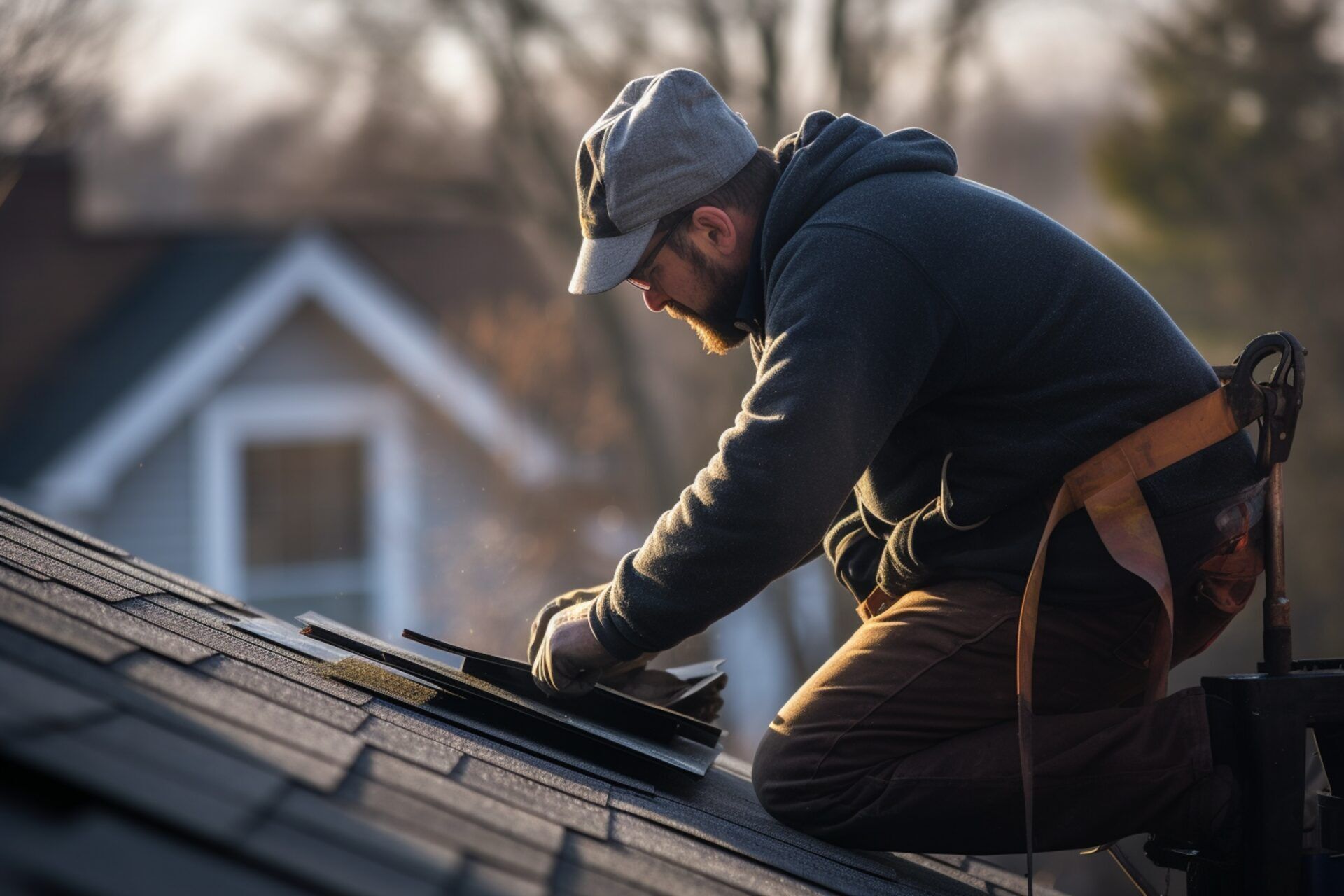
Common questions
Answers from the crew, not a call center.
-
Where does wind damage to a roof start?
At the edges and corners, not the middle. Wind suction is far higher around the perimeter, so the typical failure begins when wind lifts the drip edge or the first course of the covering, gets underneath, and peels the system inward. That is why perimeter fastening matters more than the choice of covering.
-
What is a secondary water barrier?
A self-adhered membrane laid over the sealed deck, beneath the covering. If the covering comes off in a storm, this layer still keeps water out of the house. It is what separates losing a roof from losing the interior as well, and it is one of the features a wind-mitigation report documents.
-
Which roof holds up best in a Miami hurricane?
There is no universal winner: performance depends on the complete system installed to its approval, not the name of the material. Standing-seam metal has no fastening exposed to weather; properly anchored tile performs well but a loose piece becomes debris; shingle depends on a sealant the sun degrades. Attachment and the perimeter decide more than material choice does.
-
What are hurricane straps?
They are the metal connections tying the roof structure to the walls — clips or straps that wrap the truss. In older construction that joint is often just a toe-nail, which is the weak link in the assembly. Reinforcing it is one of the best value-for-money upgrades available, and the best moment is while the roof is open.
-
Do windows really matter for the roof?
Yes. As long as the house stays sealed, the roof only fights suction from outside. If debris breaks a window, internal pressure rises and pushes the roof up from below at the same time the wind pulls from above. A strengthened roof with unprotected openings leaves the weak link unsolved.
-
What does a 150 MPH roof rating mean?
Less than it sounds put that way. Products do not carry a universal wind speed: they carry approvals for design pressures in specific applications — a pitch, a deck type, a zone of the roof, a fastening pattern. The useful question is what the system’s approval number is and whether it covers your application. That is public and checkable.
-
What should I check after a storm?
From the ground: drip edge bent or lifted, tiles or shingle fragments in the yard, granules collecting in the downspouts, and new stains on interior ceilings or in the attic. Document everything with dated photographs before anyone touches it. Do not climb onto the roof yourself.
-
Does Art’s Roofing & Construction do hurricane reinforcement?
Yes. Every roof we install in Miami-Dade and Broward is built to HVHZ code — currently approved underlayment and fasteners, a self-adhered secondary water barrier over the sealed deck, and strap reinforcement where the inspection calls for it — and we produce the wind-mitigation report for the insurer. Miami-Dade: (786) 481-4014.
Want to know how your roof is actually attached?
We walk it, document it with photographs and tell you which layers are there and which are missing. Free across Miami-Dade, Broward and Palm Beach.