Updated: October 20, 2026
After a storm, the order matters: make sure everyone is safe, then record the damage with dates and photos taken from the ground and from inside, then limit further water damage and get a licensed roofer to assess the roof. Nobody in the household needs to climb onto the roof for any of this.
First: is it safe to be in and around the house?
Roof damage is rarely the most dangerous thing on a property after a storm. Before you look up, look around.
- Downed power lines. Treat every downed line as energized. OSHA’s guidance for crews working on storm-damaged roofs is to treat all power lines as “live” and warns that portable generators can “backfeed” lines that are no longer receiving grid power. Ready.gov adds that downed or underground lines can electrically charge standing water. Stay out of puddles near fallen wires and call the utility.
- Wet electrical. Do not touch electrical equipment if it is wet or if you are standing in water. If you can reach the main breaker safely and dry, turning it off prevents shock; if you can’t, leave it to an electrician or the utility.
- Sagging or bulging ceilings. A ceiling that is bowing or dripping is holding water and can come down. Keep people and pets out of that room, don’t stand under it, and don’t push on it.
- Structural damage. The National Weather Service advises walking around the outside of the home to check for structural damage and staying out of a building that authorities haven’t declared safe. If you hear shifting or cracking, get out.
- Generators. Never run a portable generator inside the home or garage.
Why the roof itself is off-limits
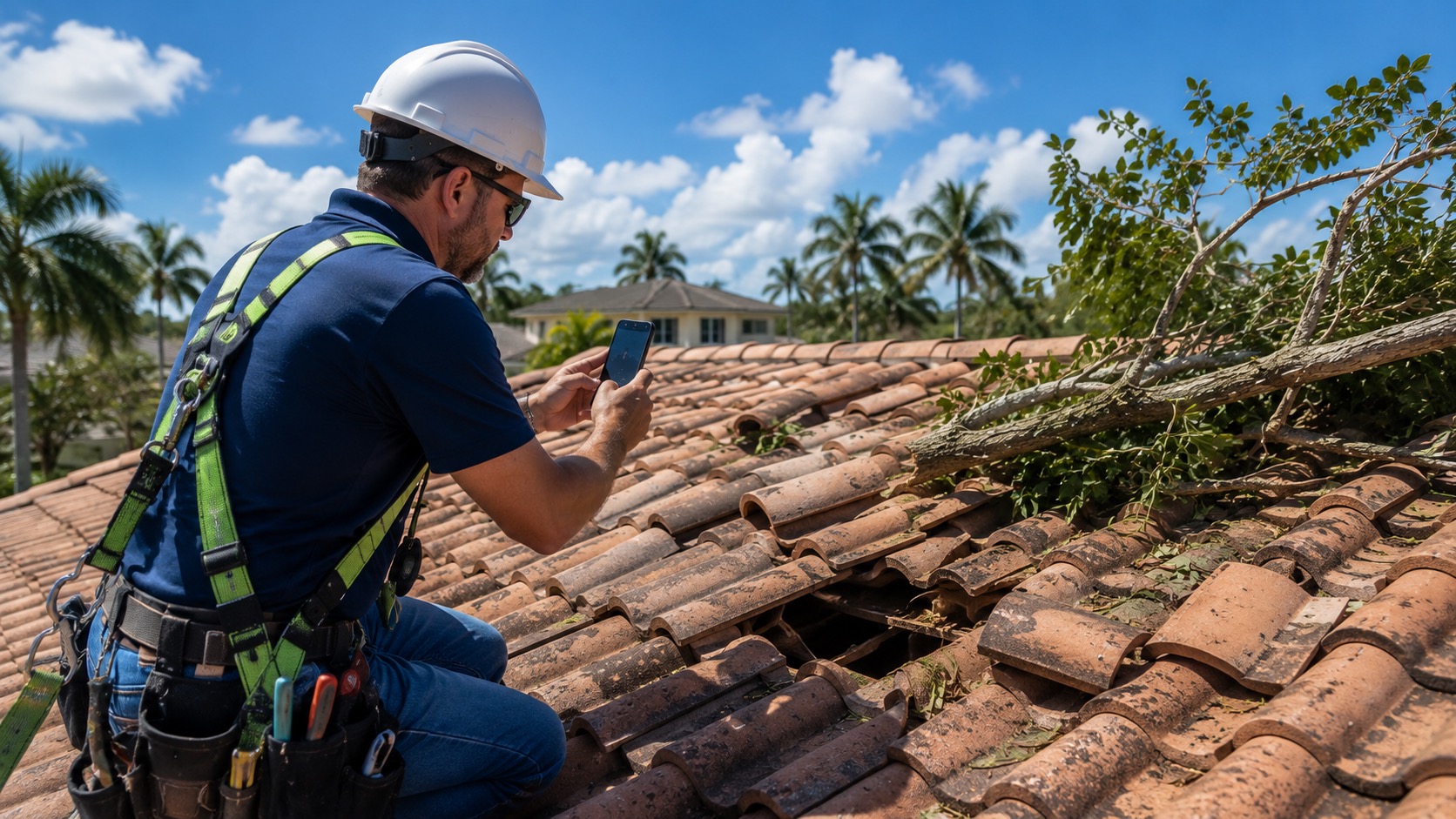
Falls are the leading cause of death in construction, and that is among trained, equipped workers. After a storm the surface is wet, debris hides holes, and tiles or decking may be loose. OSHA’s own rule for professional crews is not to work on top of a damaged roof until its strength and structural integrity have been determined. A homeowner on a ladder after a hurricane is taking a risk that no photo or insurance claim is worth.
Start a damage record: what, when, where
Insurers and roofers work from evidence. The Florida Department of Financial Services’ current storm advice is to “take pictures, videos, or written notes of the damage” and to report it to your agent or insurer. A simple log turns scattered photos into a timeline.
| Column | What to write |
|---|---|
| Date and time | When you noticed it, and when you took each photo or video |
| Location | ”Front slope, above the garage”, “Primary bedroom ceiling, northeast corner” |
| What you see | Missing tiles, debris in the yard, a new stain, active drip |
| Evidence | File names of the photos and videos for that item |
| Action taken | ”Moved furniture”, “Bucket under drip”, “Roofer covered opening” |
| Receipts | Who did it, what it cost, invoice number |
Photos and video that are actually useful
- Outside, from the ground. Walk the perimeter in daylight. Take a wide shot of each side of the house, then zoom in on anything that looks wrong: missing or displaced tiles, lifted shingles, bent edge metal, a limb on the roof. A phone’s zoom from the yard or the street is enough.
- From windows. Upper-floor windows often give a better angle on lower roofs. Don’t lean out or climb out.
- Debris before cleanup. Tile fragments, shingle pieces and metal trim in the yard or pool are evidence of what came off. Photograph where they landed before anyone moves them.
- Inside. New ceiling stains, wet drywall, drips, water on floors, damaged contents. Shoot a wide view of the room and a close-up of each spot.
- The attic, only if it is safely accessible. If you have a floored attic with a fixed stair and working light, a quick look for daylight or wet insulation helps. If getting there means balancing on joists or squeezing through a hatch, leave it to the roofer.
- A narrated video. One continuous walk-through, saying the date and what you’re filming, is a strong companion to individual photos.
Keep the original files. Don’t edit or filter them, and back them up off the phone. Your phone records the date and time in each file; make sure the device clock is correct.
Why dates matter
Florida law ties the claim deadlines to the date of loss, and for weather events it defines that date as the day a hurricane made landfall, or the day the tornado, windstorm, severe rain or other weather event is verified by NOAA. A record that shows when each item appeared helps separate storm damage from older wear.
Temporary mitigation: limiting further damage
Temporary mitigation means stopping things from getting worse until a proper repair can be made. The state’s guidance is to “make emergency repairs to prevent further damage and document them”. Also check your own policy for the conditions it sets after a loss, so you know what your insurer expects of you.
What you can usually do from inside, safely:
- Photograph first, then move furniture, electronics and documents away from leaks.
- Put buckets and towels under drips and cover belongings with plastic sheeting.
- Keep wet areas ventilated if the power and weather allow.
What belongs to a professional: anything on the roof. Covering an opening with a tarp or temporary membrane means working at height on a damaged surface, near possible live wires, often on wet material. OSHA warns that a tarped roof is very slippery and that tarped-over skylights and openings are invisible to someone walking on it. Our guide to emergency roof tarping explains what temporary protection can and can’t do.
Keep every receipt. Invoices for tarping, water extraction, drying equipment and materials, plus before-and-after photos of the temporary work, document what you spent to prevent further damage. Ask whoever installs a temporary cover to photograph the damage before covering it.
Hold off on permanent repairs until you have spoken with your insurer about whether they want to inspect first. Policies and situations vary; ask rather than assume.
Get a professional assessment
A roofer working with fall protection can see what you can’t from the ground: the condition of the edge metal, ridge and hip pieces, flashing at walls and penetrations, the underlayment wherever the covering is broken, and the deck below it. From inside, they check the attic for wet decking, daylight and the path the water took.
What a useful assessment gives you:
- Photos of each damaged area, with its location on the roof.
- A written description of what failed and what it would take to fix it.
- A clear line between storm damage and pre-existing wear, where the roofer can tell.
Before anyone works on your roof, check their license on the Florida DBPR license search. The state’s advice after storms is also not to rush into signing contracts. For what a full inspection covers and its limits, see our roof inspection guide.
Documentation for your insurer
This is general information, not legal advice. Your policy and your insurer set the procedure; for disputes, talk to a licensed professional or the Department of Financial Services helpline (1-877-MY-FL-CFO).
Current Florida notice deadlines (§ 627.70132, Florida Statutes, 2026):
| Type of claim | Notice must be given within |
|---|---|
| New claim or reopened claim | 1 year after the date of loss |
| Supplemental claim (additional loss from the same peril, already adjusted) | 18 months after the date of loss |
These are outer limits. Your policy may also require prompt notice, and the longer you wait, the harder it is to show what the storm did. Report as soon as you have your first set of photos.
A file worth having ready:
- Policy number and the declarations page (it shows your deductibles).
- The damage log, with photos and videos.
- Receipts for temporary mitigation and any related expenses.
- The roofer’s written assessment.
- Notes of every call with the insurer: date, name, what was said.
Report damage even if it looks small. If a hurricane is involved, the Department of Financial Services advises policyholders to file claims even when the repair cost is below the hurricane deductible, because that creates a record that counts toward the deductible for later hurricane losses in the same calendar year. Whether your claim falls under the hurricane deductible or the regular one depends on the storm; our step-by-step guide to roof insurance claims covers working with the adjuster.
Visible tile damage vs underlayment damage
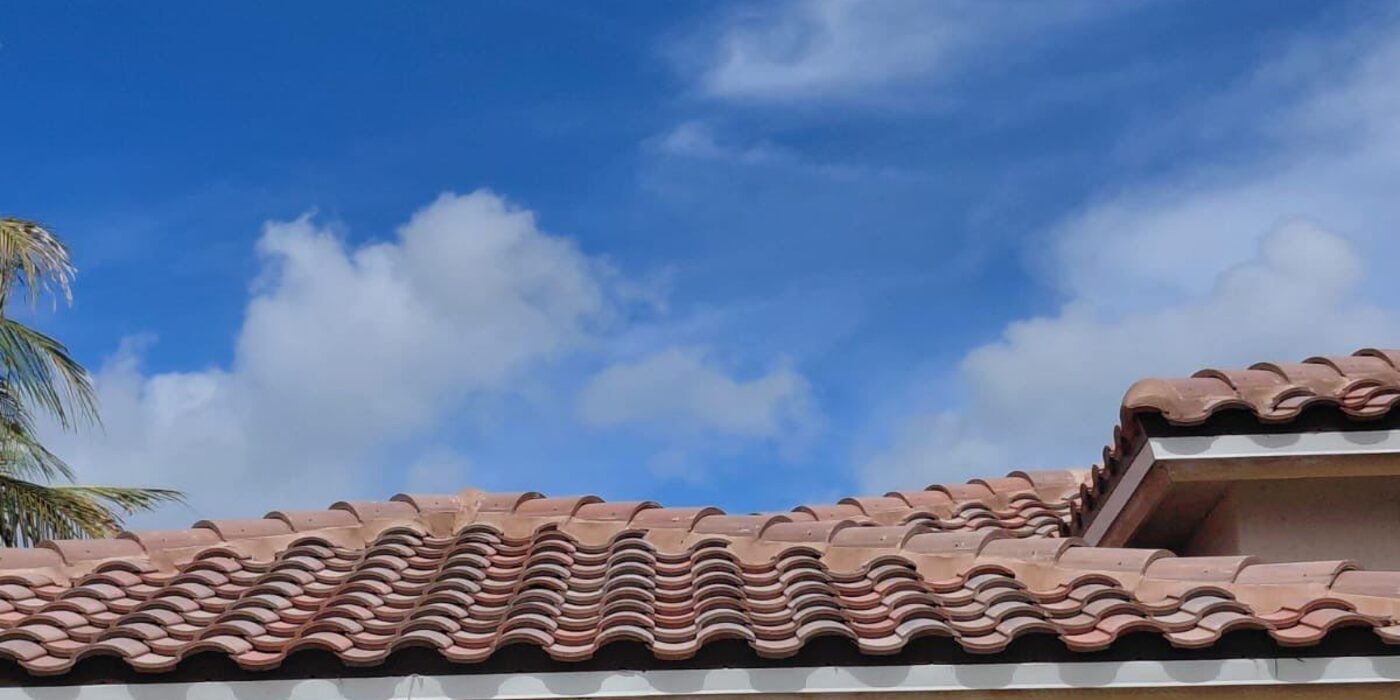
On a tile roof, what you can see from the street is only half the system. The industry installation manual used in Florida describes a tile roof as a water-shedding assembly: the tiles and the underlayment beneath them work together, and the underlayment handles the water that gets past the tiles.
| Tile damage | Underlayment damage | |
|---|---|---|
| Visible from the ground? | Often: missing, slipped or broken tiles, gaps in the rows | No. It sits under the tile |
| Typical storm causes | Wind lifting tiles, especially at edges and ridges; impact from debris or limbs | Exposure once tiles are gone, debris punctures, or water driven past aging material |
| What it means | A broken tile is an opening in the covering, but water may still be stopped below it | Water can reach the deck and the house even where every tile looks intact |
| How it’s confirmed | Photos from the ground; up close by a roofer | A roofer lifting tiles at the suspect area and checking the deck and attic |
So a few broken tiles don’t automatically mean the roof is leaking, and a roof with no visible damage can still be letting water in. That’s why an assessment looks at the underlayment wherever there is a clue: a stain inside, an exposed patch, a broken tile above a leak.
Leaks with no visible damage
A new stain after a storm with nothing missing on the roof is common, and it still needs attention. Likely explanations a roofer will check:
- Wind-driven rain pushed under tiles, through flashing joints, around vents or pipe boots, or in at the soffits.
- Aging underlayment that held in normal rain but not under storm conditions.
- Water traveling. Water often runs along the deck or a rafter before it drips, so the stain can be some distance from where it entered.
- Not the roof at all. Windows, walls, doors and air-conditioning lines can produce stains that look like roof leaks.
How the source is identified can matter for coverage. Florida’s statutory definition of hurricane coverage, for example, includes interior rain damage when the windstorm first damages the building and creates an opening through which the rain enters. Your own policy wording governs, so ask the roofer to document where the water got in, not only where it showed up. For what you can safely observe yourself, read how to find a roof leak safely.
Next step
Once everyone is safe and you have your first photos, have the roof assessed before small openings turn into interior damage. Art’s Roofing & Construction (Florida licenses CCC1333598 and CGC1541858) inspects and repairs storm-damaged roofs across Miami-Dade, Broward and Palm Beach. See our roof repair service or request a free estimate.
Sources
- Hurricanes | Ready.gov (ready.gov)
- After a Hurricane | National Weather Service (weather.gov)
- Roof Tarping (Blue Roof) Safety — OSHA Fact Sheet DOC FS-3926 (osha.gov)
- OSHA's Fall Prevention Campaign (osha.gov)
- Florida Statutes § 627.70132 — Notice of property insurance claim (2026) (flsenate.gov)
- Florida Statutes § 627.4025 — Residential coverage and hurricane coverage defined (2026) (flsenate.gov)
- Florida's Hurricane Deductible — Florida Department of Financial Services (myfloridacfo.com)
- CFO and State Fire Marshal Blaise Ingoglia visits Palm Beach County on eighth stop in statewide hurricane preparedness tour (Aug. 25, 2026) (myfloridacfo.com)
- Florida High Wind Concrete and Clay Tile Installation Manual, 7th Edition (FRSA–TRI, Dec. 31, 2023) (eagleroofing.com)
- Florida DBPR — License search (myfloridalicense.com)