
Updated: October 20, 2026
Hurricane season runs June 1 through November 30. The time to fix a roof is before the cone shows up on the news. Here’s a checklist you can work through from the ground, followed by what a licensed roofer checks on the parts you shouldn’t climb up to see.
Before the season
- Look up — from the ground. Walk around the house in daylight. Cracked, slipped or missing tiles and lifted shingles are entry points for wind and water. Binoculars or your phone’s zoom help; a ladder isn’t needed.
- Note the flashing you can see. Valleys, chimneys, walls and pipe boots are common leak sources. If anything looks bent, lifted or rusted from the ground, add it to the list for your roofer.
- Keep the drainage clear. Clogged gutters and scuppers send water under the roof edge. Cleaning them means ladder or roof work, so have it done by someone with the right equipment.
- Trim the trees. Branches over the roof become projectiles and abrade the surface. Leave limbs near the roof or power lines to a tree professional.
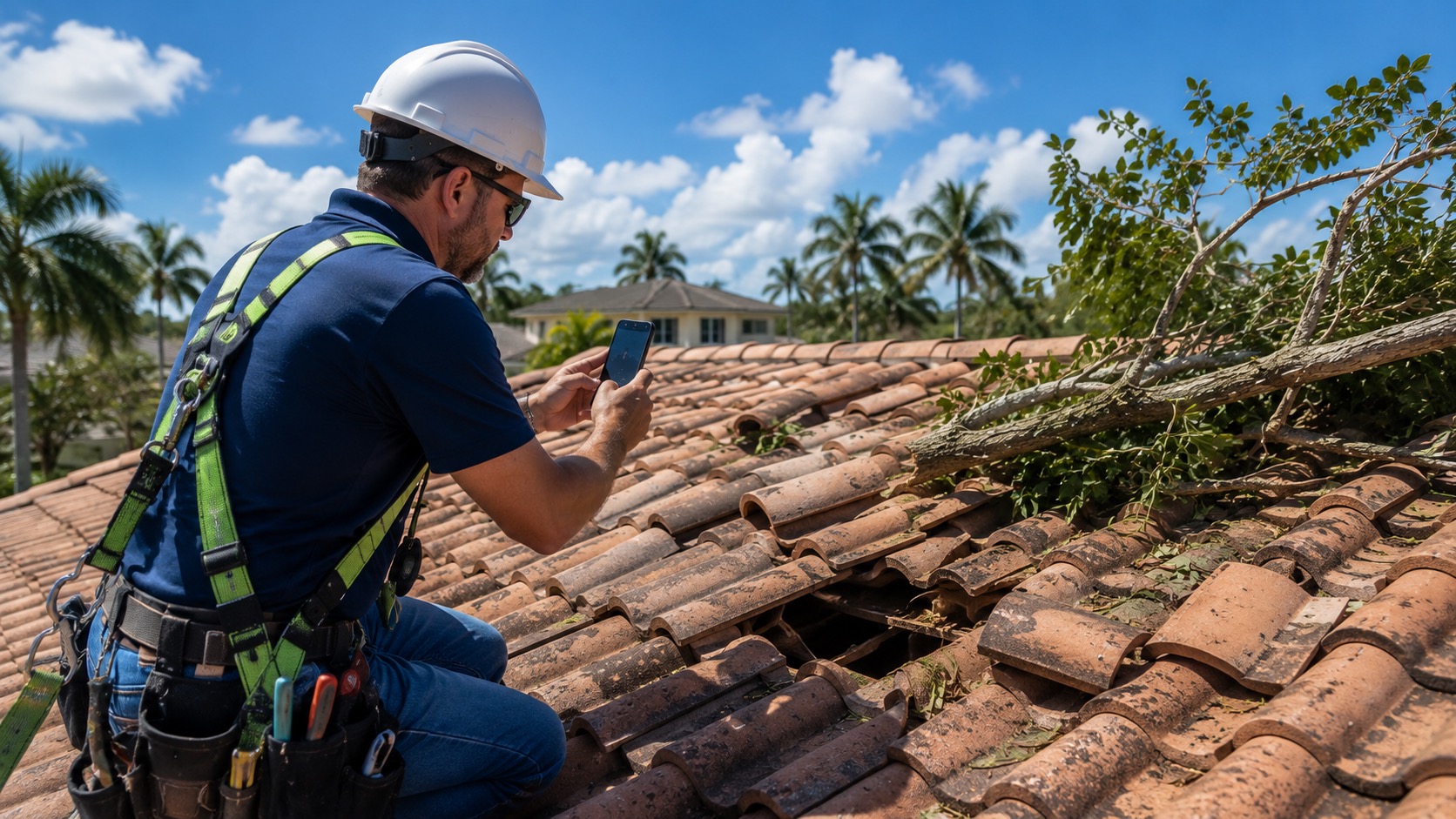
- Photograph everything now. Date-stamped photos make any future claim far easier.
Don’t climb onto the roof yourself for any of this. Falls are the leading cause of death in construction, and that’s among workers who are trained and equipped for it.
Worth upgrading
- Secondary water barrier. A layer under the roof covering that keeps water out even if the surface is breached, such as a self-adhered membrane over the deck or sealed deck seams. IBHS’s FORTIFIED program reports that sealing the roof deck’s seams can reduce water intrusion by up to 95% if the covering is lost. What the code requires on your roof depends on the code edition, your location and the approved roof system, so ask your roofer what your permit calls for.
- Ring-shank / proper nailing pattern. How the deck is fastened to the trusses is a big part of what holds the roof on in design winds.
- Wind-mitigation inspection. Documents your roof’s straps, deck attachment and covering. Florida law requires residential property insurance rate filings to include discounts or credits for construction features that reduce windstorm loss, so documenting them can lower your premium. See how the wind-mitigation inspection works.
What a licensed roofer checks on a pre-season walk
Your ground-level check finds the obvious problems. A pre-season walk by a licensed roofer, working on the roof with fall protection and inside the attic, covers what you can’t see from the yard. Typical points:
The covering, piece by piece
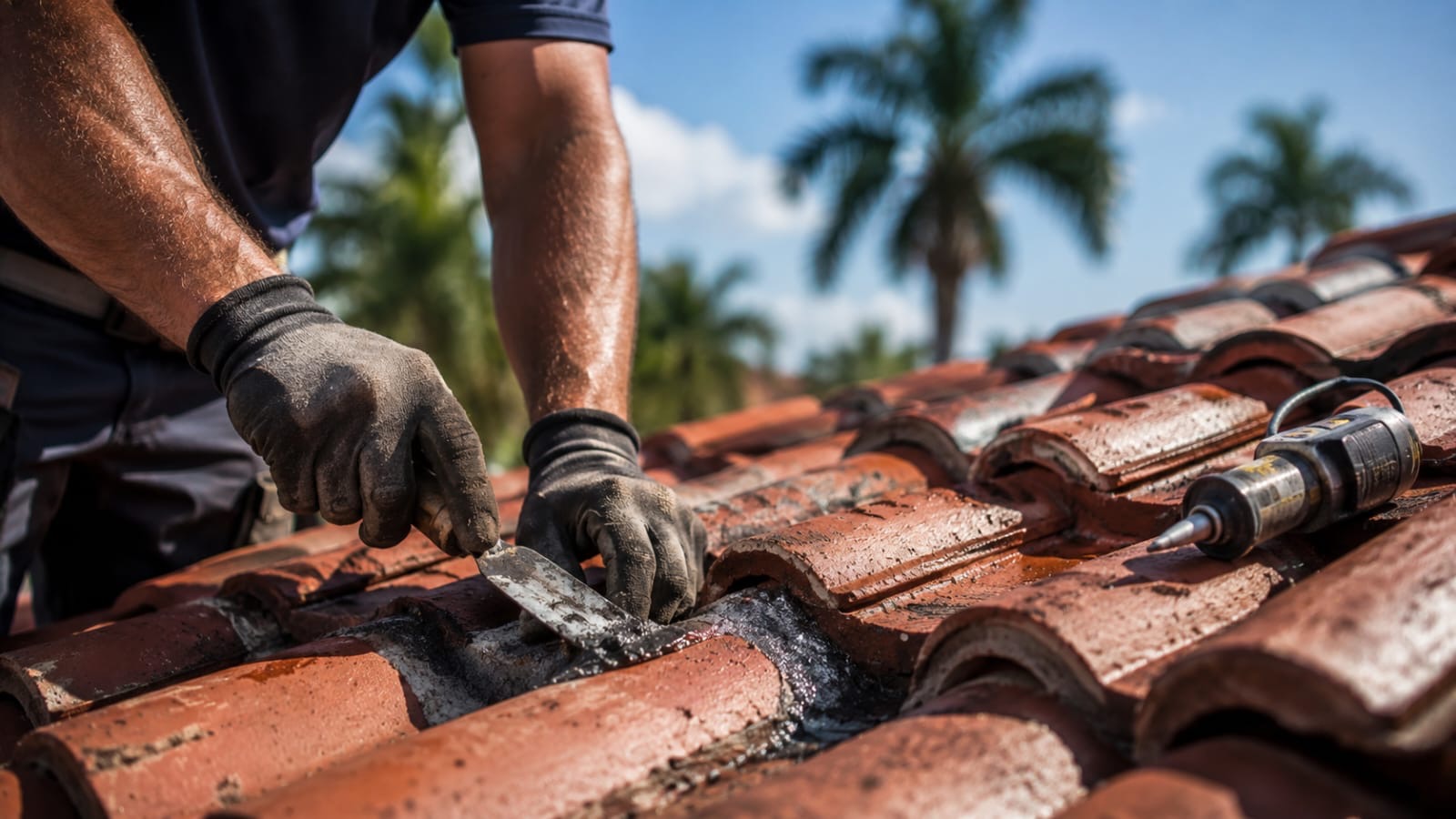
- Tile: cracked, slipped or loose tiles, gaps at the eaves and rakes, and whether hip and ridge pieces are still firmly attached. The tile industry’s Florida installation manual treats hip and ridge attachment as its own detail, with specific approved methods.
- Shingle: lifted or unsealed tabs, creases, missing pieces and heavy granule loss.
- Metal: loose or backed-out fasteners, open seams and lifted panel ends.
- Flat and low-slope: open seams, blisters, punctures and areas where water stands.
The edges
IBHS notes that roof damage often begins when wind gets underneath the roof edge. A roofer checks that the drip edge and edge metal are fastened tight, that the first course of the covering is secure, and that gable ends and rakes haven’t loosened.
Flashing and penetrations
Wall and chimney flashing, valley metal, pipe boots, vents and skylight curbs. These are the joints where water most often gets in, and they can’t be judged from the ground.
What’s under the covering
On a tile roof, the underlayment beneath the tile does much of the waterproofing work. A roofer looks at it wherever it’s exposed (at broken tiles, edges and penetrations) and lifts tiles where there’s a clue, such as a stain inside. It’s also where they can tell you whether there’s any secondary water protection at all.
Drainage
Gutters, downspouts, scuppers and roof drains: are they clear, attached and actually carrying water away from the roof edge and the walls?
The attic, from inside
Stains or soft spots on the underside of the deck, daylight showing through, wet insulation, and the type of connection between the roof structure and the walls (toe-nails, clips or straps). That last point is also what a wind-mitigation inspector records.
What you should get back
Photos of each finding with its location, and a written list that separates “fix before the season” from “keep an eye on.” Before anyone works on the roof, check their license on the Florida DBPR license search. For what a full inspection covers, how long it takes and its limits, see our roof inspection guide.
If a storm is coming
Don’t climb a wet roof, and don’t go up to tarp it yourself before or after a storm. If you have an active leak, move belongings, catch the water and call a roofer. A professionally installed temporary cover can limit the damage until it’s safe to do permanent repairs; our guide to emergency roof tarping explains what it can and can’t do. After the storm, our after-the-storm guide covers safety and documentation.
Want a pre-season roof inspection before the next storm? Request a free estimate or contact us.
Sources
- Tropical Cyclone Climatology — NOAA National Hurricane Center (nhc.noaa.gov)
- FORTIFIED Roof — IBHS (fortifiedhome.org)
- OSHA's Fall Prevention Campaign (osha.gov)
- Florida High Wind Concrete and Clay Tile Installation Manual, 7th Edition (FRSA–TRI, Dec. 31, 2023) (eagleroofing.com)
- Florida Statutes § 627.0629 — Residential property insurance; rate filings (2026) (flsenate.gov)
- Florida DBPR — License search (myfloridalicense.com)