
Miami-Dade County
Roofing in Miami
From Brickell high-rises to Coconut Grove cottages, Miami's roofing demands vary block by block. Salt air, hurricane wind and afternoon storms attack roofs from three sides at once. Every project we install in the City of Miami is rated for HVHZ and inspected to current Florida Building Code.
- County
- Miami-Dade County, FL
- Code
- Florida Building Code · HVHZ
- Permits
- Every roof replacement — and most repairs beyond a small patch — needs a building permit. Inside city limits the permit goes through the City of Miami Building Department; addresses in unincorporated Miami-Dade (Kendall, Westchester, parts of Coconut Grove's outskirts) go through Miami-Dade County. We file, schedule and close out the permit; it is issued in our license number, not yours.
- Typical replacement
- A full replacement on a typical Miami single-family home runs $14,000 to $32,000 turnkey — tear-off, permit, sealed deck, new system and final inspection. Tile and standing-seam metal sit at the top of that range; architectural shingle at the bottom.
- Nearest office
- 400 University Dr Ste. 400, Coral Gables, FL 33134
- ZIP codes
- 33127 · 33129 · 33130 · 33131 · 33132 · 33133 · 33135 · 33137 · 33138 · 33144 · 33145
Climate and exposure in Miami
Miami sits inside the Florida Building Code's High-Velocity Hurricane Zone (HVHZ), which covers all of Miami-Dade and Broward counties. Roofs here are designed for ultimate wind speeds in the 170–175 mph range — the most demanding roofing standard in the United States.
The wet season runs roughly May through October, and hurricane season is June 1 to November 30. Miami averages about 60 inches of rain a year, most of it in short, violent afternoon storms that find every weak seam and lifted tile.
Sun and salt do the slow damage. Year-round UV bakes asphalt shingles and dries out tile underlayment, while salt air off Biscayne Bay corrodes standard nails, flashing and vents — especially east of US-1 and along the bay-front neighborhoods.
Homes and roof types in Miami
Most single-family homes in Miami are concrete block and stucco (CBS) built between the 1940s and 1970s, with barrel tile, asphalt shingle or a mix of pitched and low-slope sections. Mid-century homes in Coconut Grove, Shenandoah and the Upper Eastside often carry flat or 'MiMo' low-slope roofs that need modified-bitumen or TPO systems rather than tile.
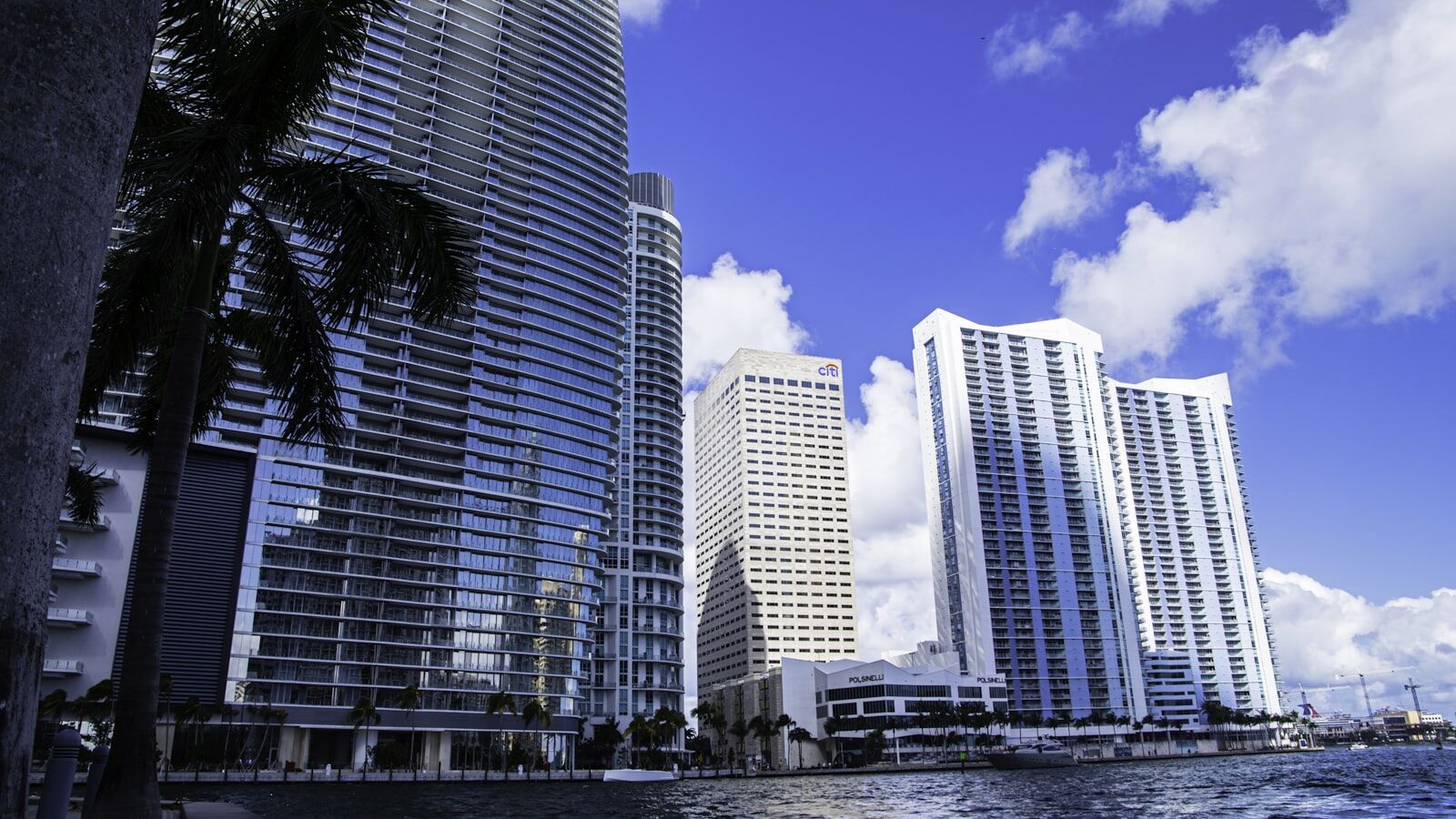
Brickell, Edgewater and Downtown are dominated by condominium towers with flat commercial roofs — parapets, scuppers, rooftop equipment curbs and HOA-managed replacements are the typical work there.
Wynwood, Little Havana and Allapattah mix older shingle roofs on residential lots with warehouse and retail buildings on flat roofs. Little Haiti and Liberty City have a large stock of aging shingle roofs that now fall under Florida's roof-age insurance rules.
Permits, code and approvals in Miami
- Every roof replacement — and most repairs beyond a small patch — needs a building permit. Inside city limits the permit goes through the City of Miami Building Department; addresses in unincorporated Miami-Dade (Kendall, Westchester, parts of Coconut Grove's outskirts) go through Miami-Dade County. We file, schedule and close out the permit; it is issued in our license number, not yours.
- HVHZ rules mean every roofing product must carry a Miami-Dade Notice of Acceptance (NOA) or a Florida Product Approval with HVHZ designation. Anyone can verify a product in the county's public Product Control search — we list NOA numbers on every estimate.
- Inspections are mandatory: typically a dry-in / tin-cap inspection before the finished roof goes on, and a final. When the roof covering is removed, Florida's existing-building code also requires a sealed roof deck (secondary water barrier) before the new system is installed.
- Florida's '25% rule' still matters in Miami: if more than 25% of a roof section is repaired or replaced within 12 months, the whole section must meet current code — unless the roof was built or replaced under the 2007 Florida Building Code or later (permitted on or after March 1, 2009), an exemption created by Senate Bill 4-D in 2022.
Materials that work in Miami
- Concrete and clay barrel tile is the Miami default: 40+ years of service, excellent in heat and wind, but heavy — an older home may need a deck and truss check before switching from shingle to tile. Tile underlayment, not the tile itself, is what usually fails at 20–25 years.
- Standing-seam metal (aluminum near the bay, coated steel inland) has the best wind uplift performance we install and reflects heat, which matters on a Miami August afternoon. Hidden fasteners avoid the corrosion points that salt air attacks.
- Architectural asphalt shingle is the value option and still HVHZ-legal when it carries an NOA and is installed with the specified nailing pattern; expect a shorter 15–20 year life under Miami's UV load.
- For flat and low-slope roofs — condos, warehouses, mid-century additions — we install TPO single-ply and modified bitumen, both of which handle ponding and rooftop equipment better than any pitched-roof product.
What a roof costs in Miami
A full replacement on a typical Miami single-family home runs $14,000 to $32,000 turnkey — tear-off, permit, sealed deck, new system and final inspection. Tile and standing-seam metal sit at the top of that range; architectural shingle at the bottom.
Targeted repairs (a leak at a pipe boot, a run of slipped tiles, a parapet flashing rebuild) usually land between $400 and $3,500. Same-day emergency tarping after a storm is available across the city.
Two things move the price in Miami specifically: roof access (tight lots in the Grove and Shenandoah slow tear-off and material staging) and deck condition — rotted plywood under a 30-year-old shingle roof is common and is priced per sheet, not guessed.
Neighborhoods we serve
Brickell · Downtown · Coconut Grove · Little Havana · Shenandoah · Wynwood · Edgewater · Upper Eastside · Allapattah · Little Haiti · Flagami
What Miami customers say
“Excellent job and faster than I was expecting. The team finished my tile roof replacement in 4 days — clean, professional, and on budget.”
“After a storm damaged our roof, Art's came out the same day, tarped it and had the full replacement scheduled within the week. Honest pricing, no pressure, and the cleanup was spotless. Highly recommend.”
Sources
- Florida Building Code — official code portal (HVHZ provisions) (floridabuilding.org)
- Miami-Dade County — Product Control (NOA) Search (miamidade.gov)
- City of Miami — Building Department (miami.gov)
- Florida Statute 627.7011 — roof age and insurance (leg.state.fl.us)
- Florida DBPR — verify a contractor license (myfloridalicense.com)
Last reviewed: by the Art's Roofing & Construction team · Florida Certified Roofing Contractor CCC1333598
Common questions
Answers from the crew, not a call center.
-
Do I need a permit to replace my roof in Miami?
Yes. Every roof replacement in the City of Miami and unincorporated Miami-Dade requires a building permit, in-progress inspections and a final inspection. The permit is issued under the contractor's license — if a roofer asks you to pull it as an owner-builder, that is a red flag.
-
What is the HVHZ and why does it change my roof?
The High-Velocity Hurricane Zone is the Florida Building Code designation for Miami-Dade and Broward. It requires roofing products with a Miami-Dade NOA or HVHZ product approval, stricter fastening, a sealed roof deck when re-roofing, and higher design wind speeds than the rest of Florida.
-
How long does a roof last in Miami?
Under Miami's sun, salt and storms: architectural shingle roughly 15–20 years, concrete or clay tile 40–50 years (with underlayment usually replaced around year 20–25), standing-seam metal 40–70 years, and TPO or modified-bitumen flat roofs 15–25 years with maintenance.
-
Can my insurer drop me because of my roof's age?
Florida Statute 627.7011 stops insurers from refusing to write or renew a policy solely because a roof is under 15 years old. For roofs 15 or older, the insurer must accept an inspection showing at least five years of remaining useful life. A wind-mitigation inspection after a new HVHZ roof usually lowers the premium.
-
Do you handle condo and commercial roofs in Brickell and Downtown?
Yes. We install TPO, modified bitumen and standing-seam metal on condominium, office, retail and warehouse roofs, work with HOA boards and property managers on phased schedules, and coordinate rooftop equipment and parapet details that flat roofs in Miami's urban core require.