Updated: October 20, 2026
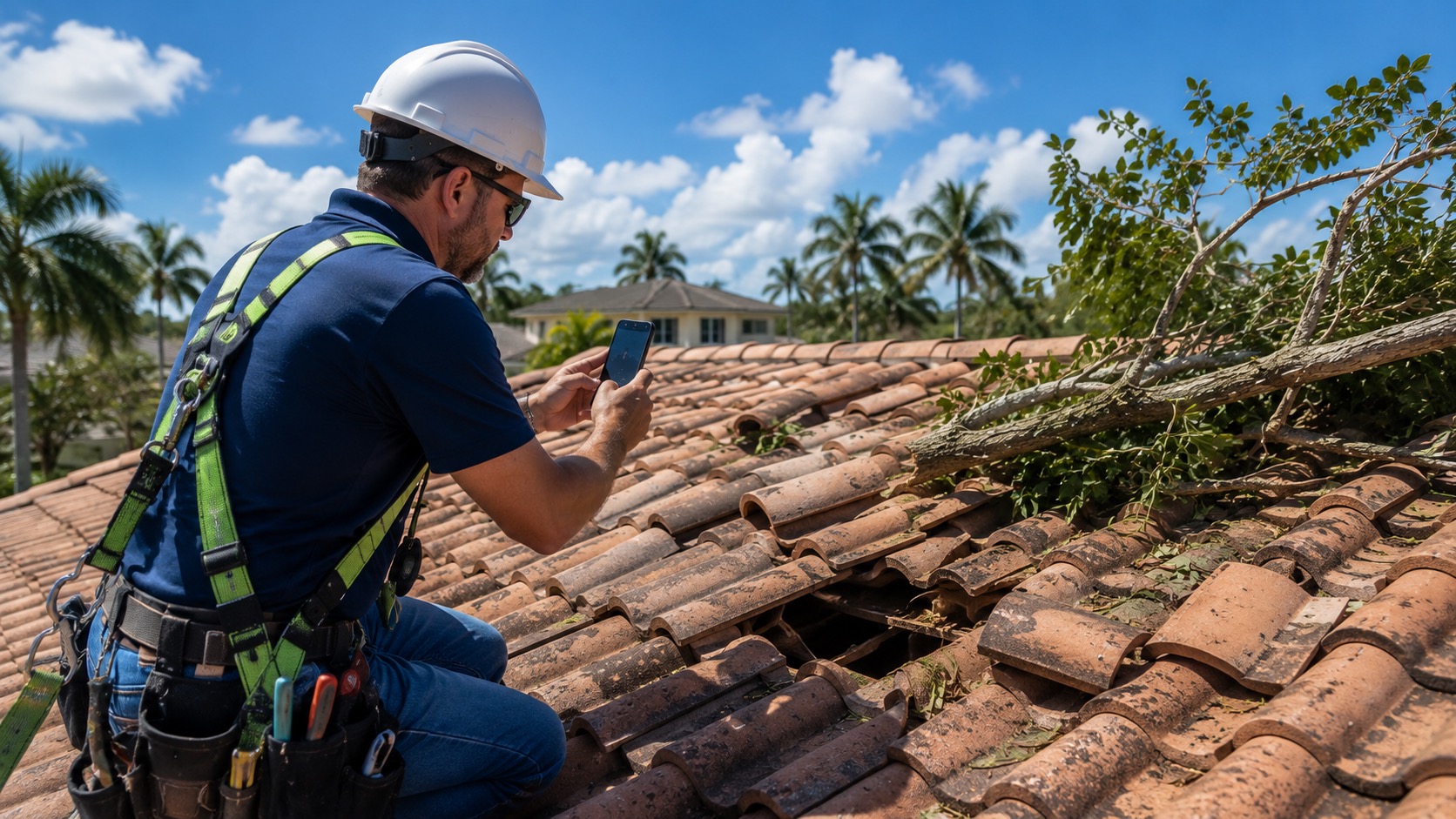
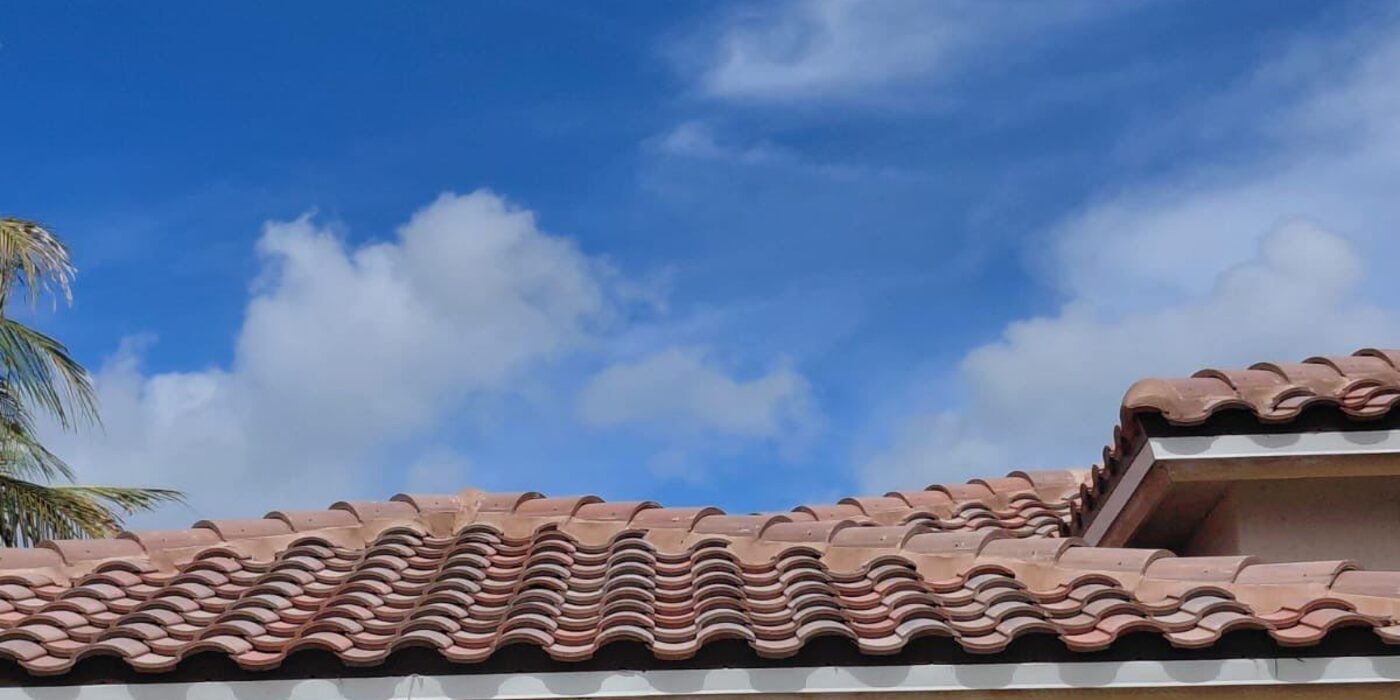
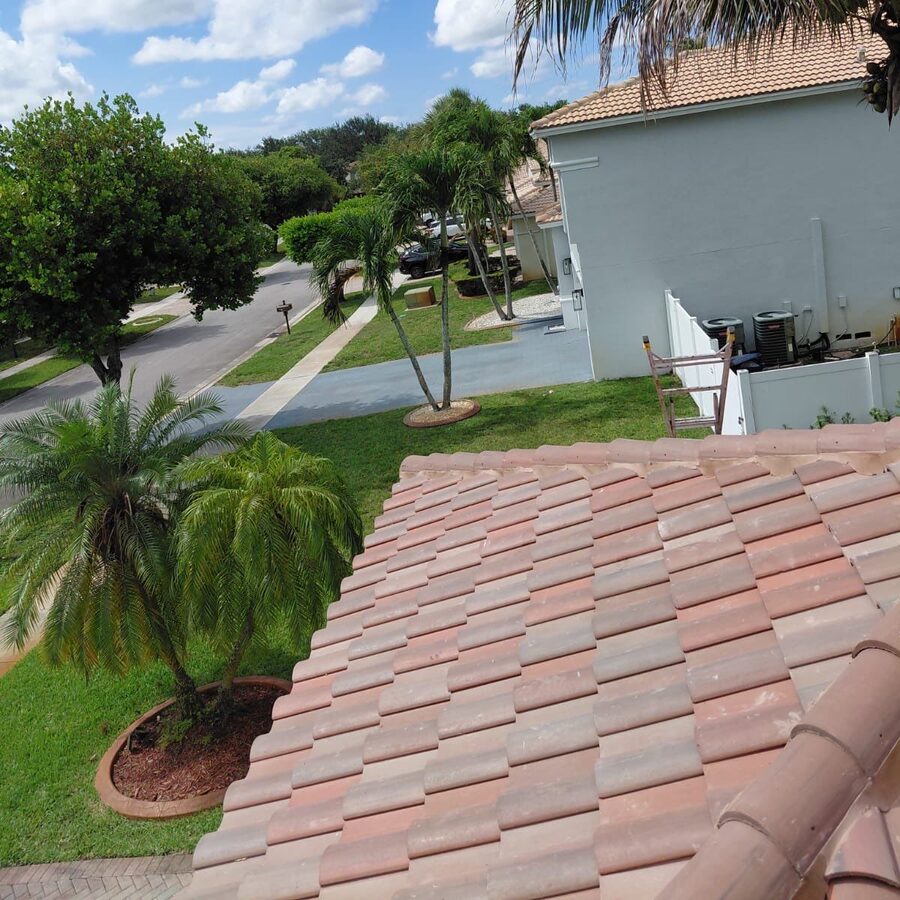
Lift-and-relay means removing the existing tiles, replacing the underlayment and flashings underneath, and reinstalling the tiles that are still sound. It is a good option when the tile is in good condition and can still be matched, and the problem is the underlayment. When the tiles themselves are failing, discontinued or can’t meet current approvals, full replacement is usually the better choice.
What does a lift-and-relay involve?
The order of work is roughly the same as a replacement, except that the tile is kept:
- Tiles are removed by hand and stacked, and broken or cracked ones are set aside.
- The old underlayment and flashings come off down to the deck.
- The deck is inspected; deteriorated sheathing is replaced and the deck is fastened as the code requires.
- New underlayment and new flashings (valleys, walls, penetrations, eaves) are installed.
- The sound tiles go back on with the attachment method the current approval calls for, plus replacement tiles where needed.
- Hips, ridges and edges are finished, and the work is inspected in stages.
People also call it “remove and reset” or “tile reset.” Whatever the name, the waterproofing layer under the tile is new; the tile on top is not.
When is lift-and-relay a good fit?
- The underlayment is the problem, not the tile. Leaks are coming from worn underlayment or flashings, while most tiles are intact. See why tile roofs leak.
- The tiles survive removal. Some breakage is normal when tiles come off, so there has to be a source for replacements.
- Replacement tiles will interlock. The Tile Roofing Industry Alliance advises consulting the tile manufacturer for tiles that “will properly interlock and seat with the existing tiles,” because “failure to properly seat can lead to leaks, breakage, and improper fit” (TRI brief 2021-02).
- You want to keep the look. On homes where the tile’s color and weathering matter, reusing it keeps the roof looking the same.
- The code and your building department accept it for your specific tile and attachment method (next section).
When is full replacement the better choice?
- The tile profile is discontinued and spares are short. The TRI Alliance’s 2026 bulletin lists discontinued tiles and manufacturers and warns that mixing discontinued and current profiles generally “results in interlock incompatibility, wind resistance issues and code noncompliance in many jurisdictions” (TRI bulletin 2026-04). Harvesting tiles from a less visible plane can help in a repair, but it has limits on a whole roof.
- Many tiles are cracked, broken or worn. Damaged tile can’t be reinstalled (see below), so a high breakage count erodes the point of saving it.
- The tile can’t be installed under a current approval. In Miami-Dade and Broward, roofing components must have a valid, current product approval. An obsolete tile may not qualify.
- You want a different material or a lighter roof. Changing material is a replacement by definition; changing to a heavier material also brings structural questions.
- Salvaged or custom tiles would void coverage you care about. The TRI Alliance notes that tiles from salvage yards or custom-made replacements “will not be covered by a manufacturer’s warranty.”
| Lift-and-relay | Full replacement | |
|---|---|---|
| Underlayment and flashings | New | New |
| Tile | Existing sound tiles reinstalled, plus matching replacements | All new tile |
| Look | Same as today | New color or profile possible |
| Main risk | Breakage during removal; finding tiles that interlock | More new material and disposal of all the old tile |
| Cost drivers | Careful removal and stacking, breakage allowance, replacement tiles, labor to reinstall | New tile, disposal of old tile, installation |
| Manufacturer tile warranty | Depends on the tile’s age and source; salvaged or custom tiles aren’t covered | New tile comes with the manufacturer’s current warranty terms |
| Permit and inspections | Yes | Yes |
Cost depends on the roof, the tile and the breakage rate. Ask for both options priced the same way so you can compare.
What does Florida’s code say about reusing tile?
Reinstallation is allowed, damaged tile is not. The Florida Building Code, Existing Building (8th Edition, 2023) permits “existing or salvaged slate, clay or concrete tile” to be reinstalled, but “damaged, cracked or broken slate or tile shall not be reinstalled,” and rusted, damaged or deteriorated vent flashings, metal edgings and counterflashings can’t be reused either (Section 706.5, code text). For repairs to an existing tile roof, salvaged tile must be “of like kind in both material and profile” (Building volume, Section 1511.5).
In Miami-Dade and Broward (the HVHZ), the HVHZ roofing chapter governs. Section 706.5 sends HVHZ work to Sections 1512–1525 of the Florida Building Code, Building. There, materials and methods used to replace a roof covering must meet those sections (1521.1), and “all roofing components, roofing systems and roofing assemblies shall have a valid and current product approval” (1512.2.1). Tile installation follows RAS 118, 119 and 120, and attachment is calculated under RAS 127 using values in the tile’s approval (1518.8). In practice, a lift-and-relay in the HVHZ is installed and inspected like a new tile roof, with reused tile. Whether a specific older tile qualifies is a question for the permit review; ask your roofer to confirm it before you sign.
No covering over tile. Tile can’t be recovered over; it has to come off (Section 706.3 and, in the HVHZ, 1521.16).
The deck gets checked either way. In the HVHZ, a roofing system can’t go over sheathing that isn’t fastened to code or is deteriorated, and deteriorated areas must be replaced (1521.5). The HVHZ owner’s notification warns that the wood deck “may have to be renailed” when roofing is replaced (1524.1). Outside the HVHZ, Sections 706.7.1 and 706.8 cover deck fastening and, for some older, higher-value homes, roof-to-wall connections.
Do you need a permit for a lift-and-relay?
Yes. It removes and replaces the roof covering, which the code treats as reroofing. In the HVHZ, permits are required for any work on roofing components, reroofing goes on the HVHZ Uniform Roofing Permit Application with the product approvals and calculations, and inspections happen during underlayment and tile installation (Sections 1512.3 and 1512.4). Mortar- and adhesive-set tile systems also get a field static uplift test (TAS 106) before final inspection (1512.4.2.4). For the process by city and county, see roof permits in Miami-Dade, Broward and Palm Beach.
Two timing points:
- The 25% rule. In any 12 months, repairing or replacing more than 25% of a roof area or section triggers bringing the whole roof or section up to current code, unless the existing roof was built, repaired or replaced under the 2007 Florida Building Code or later, in which case only the repaired portion must comply (Section 706.1.1; HVHZ Section 1521.4).
- The 9th Edition is scheduled to start December 31, 2026. Miami-Dade’s Product Control Section says that for permit applications submitted on or after January 1, 2027, underlayment under tile may only be installed according to the approved uses and uplift resistance in its current approval (Miami-Dade memo). Which edition applies to your job depends on when the permit is applied for.
Questions to ask before you choose
- What share of the tiles do you expect to break, and where will replacements come from?
- Is my tile profile still produced? If not, is there enough matching tile to finish the roof?
- Under which product approval will the tiles be reinstalled, and with what attachment method?
- What underlayment and flashings will you install, and under which approval?
- What happens if deck damage is found once the tile is off?
- How do the manufacturer and workmanship warranties differ between the two options?
The tile roofing guide covers clay vs. concrete, attachment and weight in more detail.
Next step
If your tile roof leaks but the tile still looks good, have both options priced side by side. See our roof replacement service or request a free estimate and ask for lift-and-relay and full replacement in the same proposal.
Sources
- 2023 Florida Building Code, Existing Building, 8th Edition — Chapter 7, Section 706 Reroofing (UpCodes) (up.codes)
- 2023 Florida Building Code, Building, 8th Edition — Chapter 15 Roof Assemblies and Rooftop Structures (codes.iccsafe.org)
- TRI Alliance Technical Brief #2021-02 — Tile Replacement Considerations for Tile Roofs (tileroofing.org)
- TRI Alliance Technical Bulletin 2026-04 — Discontinued Roofing Tiles in North America (tileroofing.org)
- TRI Alliance Technical Brief #2022-001 — Post Storm Event: Considerations for Repairing Damaged Concrete and Clay Roofing Tiles (tileroofing.org)
- Miami-Dade Product Control — 9th Edition FBC (2026) Roofing Underlayment Updates (July 31, 2026) (miamidade.gov)