Updated: October 20, 2026
A tile roof usually leaks because the layer under the tile has worn out, not because the tile itself has. Concrete and clay tiles shed most of the rain; the underlayment beneath them is what stops the water that gets past. When that layer is breached, water reaches the deck even if the tiles look fine from the street.
What does each layer actually do?
The FRSA-TRI installation manual used for tile in Florida describes a tile roof as a “water shedding assembly.” Tiles overlap and interlock so that most water runs over them to the eave. Some water always gets under them: wind-driven rain, water at laps and cut edges, and water through any broken tile. The underlayment carries that water down and off the roof.
The Tile Roofing Industry Alliance puts it this way: “In most cases, the underlayment acts as a secondary water barrier” (TRI post-storm brief). It is called secondary because the tile sees the weather first. It is also the last layer above the wood.
| Layer | Main job | How it usually fails |
|---|---|---|
| Tile (concrete or clay) | Sheds most water; protects the underlayment from sun and impact | Cracks or breaks from impact (debris, foot traffic); slips if attachment fails |
| Underlayment | Stops and carries away water that gets past the tile | Breaks down where exposed to sun and water; fails at laps, seams and fastener holes |
| Flashings | Seal walls, valleys, penetrations and edges | Corrosion, open laps, sealant-only joints, missing underlayment-level flashing |
| Deck (plywood or boards) | Structural base | Rots or loses fastener grip after repeated wetting |
Why do leaks show up as the underlayment ages?
Because the underlayment’s condition, not the calendar, decides when water gets through, and its condition depends on what it has been exposed to. The TRI Alliance notes that “regardless of its age, underlayment that has not been exposed to the elements will likely continue to shed water if needed.” The conditions that wear it out are more useful to know than any single number of years:
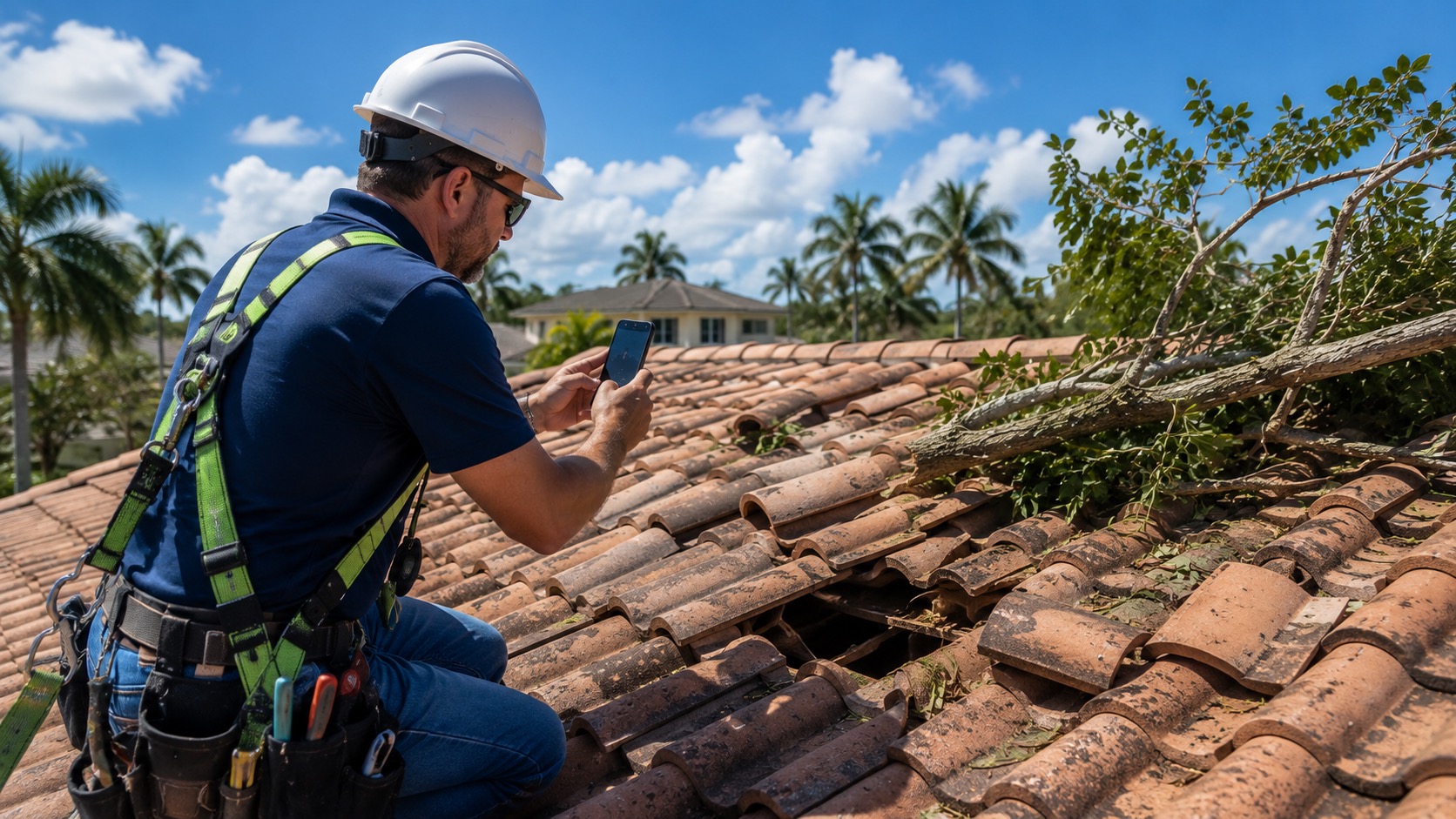
- Broken or slipped tiles. A gap in the tile lets sun and water reach the underlayment directly. The TRI Alliance says broken tiles “should be replaced as soon as possible to avoid damage to the underlayment from water intrusion or exposure to the ultraviolet rays of the sun” (walkability brief).
- Details that concentrate water. Valleys, wall abutments, penetrations and eaves carry or hold more water than the open field, so underlayment fails there first. Raised fascia designs can hold water at the eave without an anti-ponding detail.
- Fastener penetrations. Mechanically fastened tile is nailed or screwed through the underlayment. The code requires sealing tile fastener penetrations in certain systems (Section 1518.8.10, Florida Building Code, Building, 8th Edition), and every penetration is a place that relies on that seal.
- Installation choices. The manual warns that “mixing of systems” (combining underlayment, flashing and attachment methods that weren’t designed together) “can lead to a reduction in the life span of a tile roof system.”
- The product itself. Different underlayments (hot-mopped two-ply systems, self-adhered membranes, mechanically attached sheets) are approved for different assemblies and carry their own manufacturer warranties. The product installed on your roof, and its documentation, matter more than a general rule of thumb.
So is there a “20-year” rule?
No code section or manufacturer rule says tile underlayment fails at a set age. You’ll hear numbers in the industry, but two tile roofs of the same age can be in very different shape depending on the conditions above. A roof that has had broken tiles left for years can leak much earlier; a well-detailed roof with intact tile can go longer. Age is a reason to have the underlayment checked, not proof that it has failed.
What are the signs from the inside?
These are observations, not a diagnosis, and none of them requires going on the roof:
- Ceiling stains after heavy or wind-driven rain, with no broken tiles visible from the ground.
- Leaks in more than one place, or a leak that returns after a spot repair.
- Stains that line up with valleys, walls or the lower edge of the roof.
- In an attic you can safely see into: darkened deck boards, rusted nail tips, or water marks on framing.
If you’re unsure where a stain is coming from, start with how to find a roof leak safely.
What are the options?
The right fix depends on how much of the underlayment has failed and on the condition of the tile.
- Spot repair. For a broken tile or one failed detail. The manual’s tile-replacement instruction is short: “Break out and replace damaged roof tile. Do not disturb underlayment. Repair underlayment if necessary.” Valley, wall and penetration repairs involve lifting the tiles at that spot, replacing the flashing and underlayment locally, and re-setting the tiles.
- Section repair. When one roof plane or area has failed. Florida’s 25% rule can matter here; see the next section.
- Lift-and-relay. Removing the tiles, replacing the underlayment and flashings, and reinstalling the sound tiles. It depends on the tiles surviving removal, on replacement tiles that interlock, and on code approval. See tile lift-and-relay vs. replacement.
- Full replacement. New underlayment and new tile, often when the tile profile is discontinued, many tiles are damaged, or the deck needs work. See roof replacement.
The TRI Alliance’s advice applies to all four: “New or harvested roof tiles should not be installed over compromised underlayment regardless of the age of the roof system.”
Code points that affect the choice
- The 25% rule. In the High-Velocity Hurricane Zone (Miami-Dade and Broward), not more than 25% of a roof area or roof section may be repaired, replaced or recovered in any 12 months unless the whole roof or section is brought up to current code. The exception: roofs built, repaired or replaced under the 2007 Florida Building Code or later need only the repaired portion to meet current code (Section 1521.4).
- Product approval. In the HVHZ, repairs must use components that have product approval (Section 1521.2).
- A rule change scheduled for December 31, 2026. The 9th Edition of the Florida Building Code is scheduled to take effect that day. Miami-Dade’s Product Control Section says that under the new code every underlayment used beneath tile must have product approval, and for permit applications submitted on or after January 1, 2027, tile underlayment may only be installed according to the approved uses and uplift resistance in its current approval (Miami-Dade memo, July 31, 2026).
For the full picture of tile in this climate (clay vs. concrete, attachment, weight and lifespan), see the tile roofing guide.
Next step
If your tile roof is leaking or you’d like the underlayment checked before storm season, request a free estimate. A licensed roofer can look under the tile at the likely spots and tell you whether it’s a spot repair or a larger job.
Sources
- TRI Alliance Technical Brief #2022-001 — Post Storm Event: Considerations for Repairing Damaged Concrete and Clay Roofing Tiles (tileroofing.org)
- FRSA-TRI Florida High Wind Concrete and Clay Tile Installation Manual, 7th Edition (12/31/2023) (eagleroofing.com)
- TRI Alliance Technical Brief #2014-02 — Walkability on Concrete and Clay Roof Tiles (tileroofing.org)
- 2023 Florida Building Code, Building, 8th Edition — Chapter 15 Roof Assemblies and Rooftop Structures (codes.iccsafe.org)
- Miami-Dade Product Control — 9th Edition FBC (2026) Roofing Underlayment Updates (July 31, 2026) (miamidade.gov)
- TRI Alliance — Frequently Asked Questions (tileroofing.org)