Updated: October 20, 2026
A full re-roof in Miami-Dade or Broward moves through the same stages on almost every house: paperwork and permit, delivery, tear-off, deck repair, the underlayment inspection, installation with in-progress inspections, a final inspection, cleanup and closeout. The order is fixed by the Florida Building Code’s inspection points for the High-Velocity Hurricane Zone (HVHZ). The pace depends on weather, the roof covering and how quickly inspections get scheduled.
For time on the roof, our published estimate for a roof replacement is five to ten working days for most single-family homes, weather permitting, and tile takes longer than shingle. Permit review happens before the crew arrives and is not part of that count.
The stages at a glance
| Stage | What happens | What you do | Inspection |
|---|---|---|---|
| 1. Contract and permit | System chosen, permit application filed, approvals obtained | Sign the contract and owner’s notification; record and post the Notice of Commencement if required | — |
| 2. Delivery | Materials and a debris container arrive | Clear the driveway and the drop zone | — |
| 3. Tear-off | Old covering removed down to the deck | Move cars, protect the attic, keep pets inside | — |
| 4. Deck repair | Damaged sheathing replaced, deck re-nailed where required | Approve any extra deck work under the contract terms | — |
| 5. Dry-in | Underlayment or base sheet installed and fastened | Keep the work area clear for the inspector | Underlayment / tin-cap |
| 6. Installation | Tile, metal, shingle or membrane goes on | Watch for messages about inspection times | In-progress (and tile uplift test where required) |
| 7. Final | Inspector checks the finished roof | Nothing, unless access is needed | Final |
| 8. Cleanup | Debris hauled away, yard and driveway swept for nails | Walk the property before the crew leaves | — |
| 9. Closeout | Permit closed, warranty papers delivered | File the documents; book a wind-mitigation inspection if useful | — |
The edition of the Florida Building Code in force on the date of this article is the 8th Edition (2023). Miami-Dade County has announced that the 9th Edition (2026) takes effect on December 31, 2026, and permit applications submitted on or after that date must comply with it. Which edition applies to your roof depends on when the permit application goes in.
Stage 1: Contract, permit and pre-start paperwork
Before anyone touches the roof, three things are settled:
- The system. The roofer names the specific product approvals (Miami-Dade NOA or Florida Product Approval) for the covering and underlayment. The HVHZ uniform permit application in FBC Section 1525 asks for the product approval pages, design calculations where applicable, and, for re-roofs, the owner’s notification.
- The owner’s notification. FBC Section 1524 makes the roofing contractor responsible for giving you the permit and explaining a short list of roofing considerations, which you initial. One of them matters for the budget: when the old roof comes off, the wood deck may have to be re-nailed to current HVHZ requirements, and you usually can’t see the deck until then. Another covers exposed-beam ceilings, where nail tips poking through may not be acceptable to you.
- The Notice of Commencement. Under Florida’s lien law, the owner signs and records a Notice of Commencement, and the statutory form says it must be recorded and posted on the job site before the first inspection. Only the owner may sign it. Ask your contractor whether your job needs one and who records it.
Permit review time varies by building department and by how complete the application is, so treat any promised date with care. Make sure the permit is pulled under the contractor’s license and that you can look it up online. The roof permit guide explains which office handles your address.
In Coral Gables there is an extra step. The Zoning Code (Section 14-202.5) has re-roofs reviewed by the City Architect or an assigned Development Review Official before the building permit is issued, and some material or color choices go to the full Board of Architects. See Coral Gables roof color and material approval.
Stage 2: Material delivery
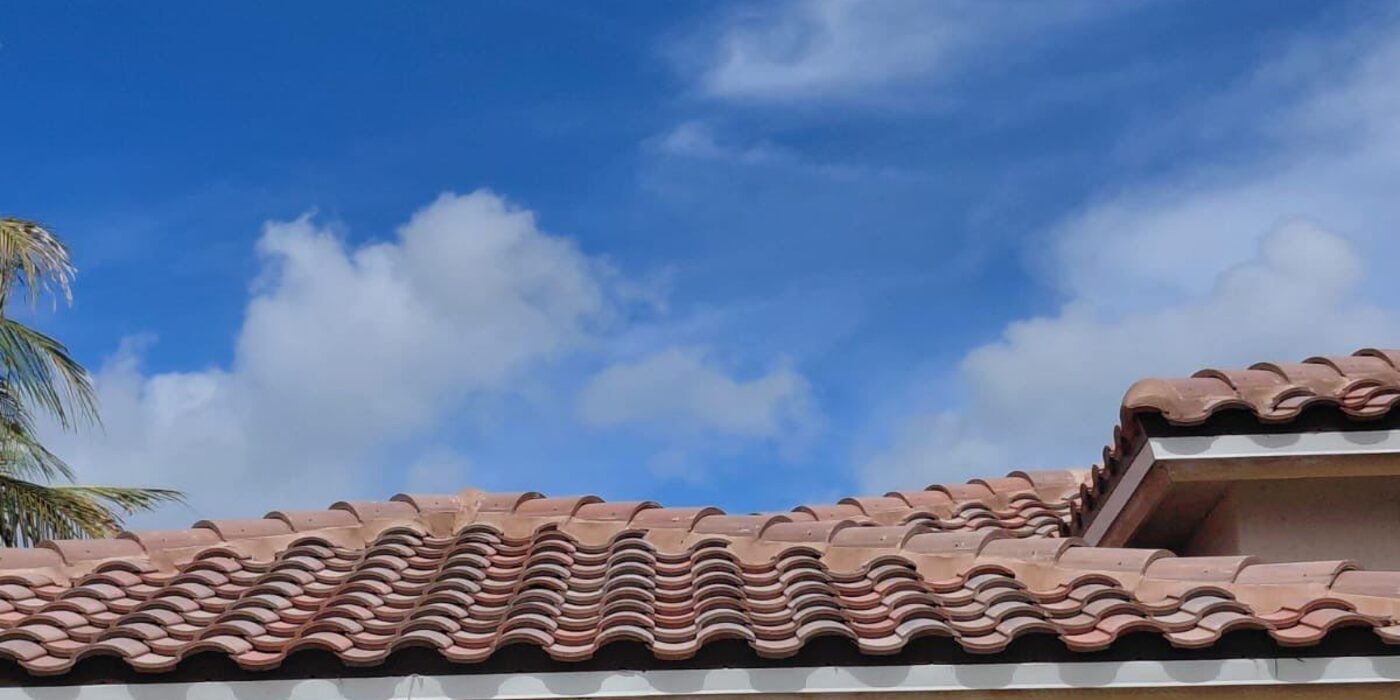
Materials usually arrive shortly before tear-off, along with a debris container or trailer. Tile comes on pallets and is heavy, so the delivery truck needs a clear path and the roofer decides where it can be staged.
What you do: clear the driveway and the side of the house where the drop zone will be. Point out sprinkler heads, septic or drain-field areas, pavers and anything else that shouldn’t take a heavy load. If you are in an HOA, check whether it has rules on containers and work hours.
Stage 3: Tear-off
This is the loudest, messiest day. Crews strip the old covering and underlayment down to the deck and send debris down to the container.
What to expect:
- Noise and vibration through the whole house for most of the working day. Hammering on the deck carries into every room.
- Attic dust. Vibration shakes dust and old granules loose. Cover or move anything stored in the attic, and close attic hatches.
- Things on walls. Take down mirrors, frames and shelf items on top-floor walls and ceilings that could fall from the vibration.
- Pets and children. Keep them inside or away for the day. Falling debris and loose nails are the main hazards.
- The driveway is often blocked. Park on the street if you need to leave.
Weather. In South Florida, afternoon storms build quickly during the rainy season. Ask your roofer how much roof they open at a time and how an open section is protected if rain comes in before it is dried in. That is the most practical weather question to ask.
Stage 4: Deck inspection and repair
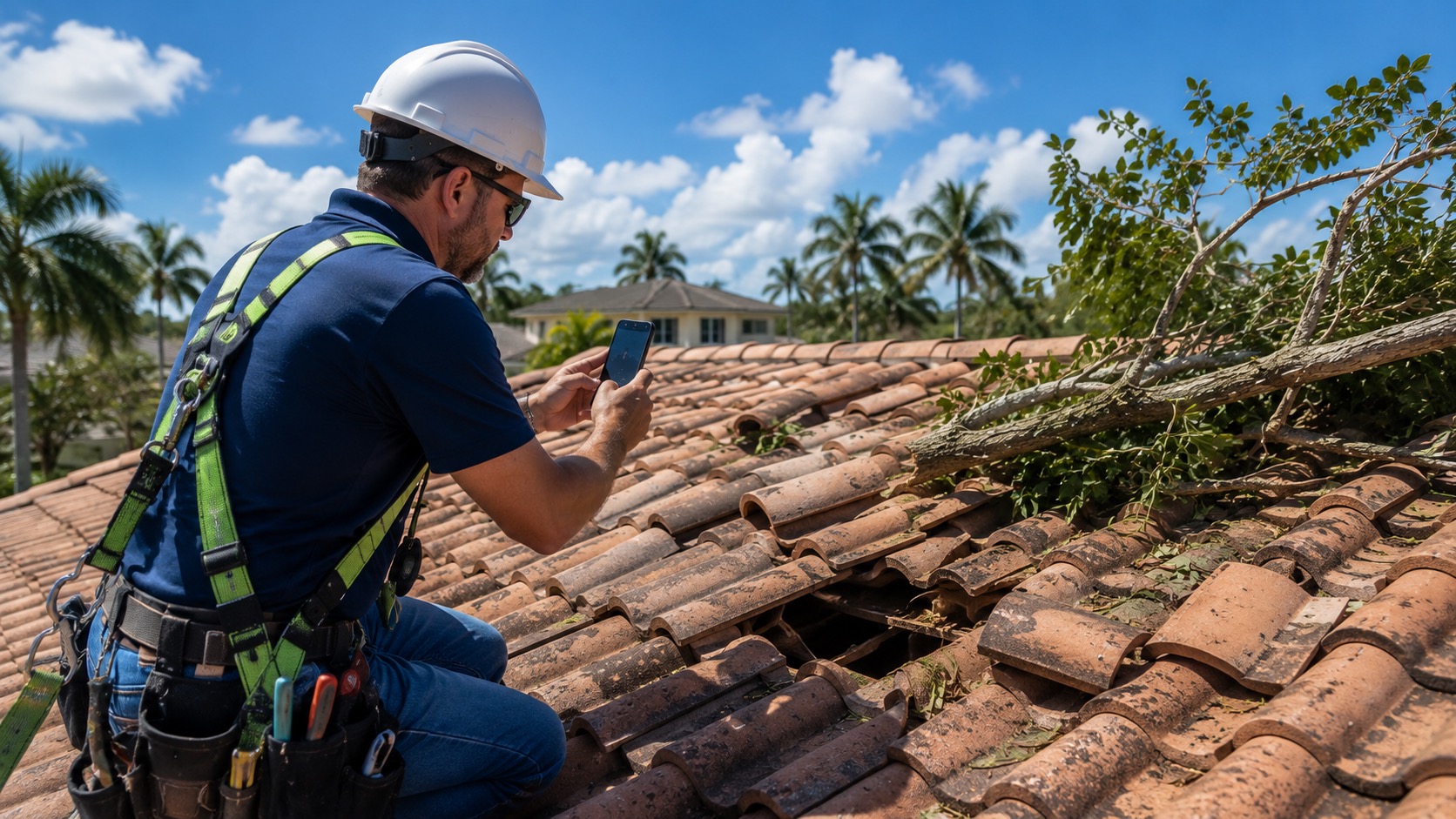
With the deck exposed, the crew checks the sheathing for rot, delamination or soft spots, which often show up around old leaks, valleys and roof edges. Damaged sheets are replaced, and the deck is re-nailed where code requires it.
What you do: this is where most change orders come from, so read how the contract prices extra deck work (per sheet, per linear foot, or another unit) before signing, and ask for photos of any wood that gets replaced. A sound contract states the unit price up front rather than leaving it open.
Stage 5: Dry-in and the underlayment inspection
Next comes the underlayment or base sheet, fastened to the deck. In Miami-Dade this is often called the tin-cap or dry-in inspection. For tile, shingle and similar “discontinuous” coverings, FBC Section 1512.4.2.1 requires an inspection during or after the base sheet, anchor sheet or underlayment goes on. Miami-Dade’s inspection legend lists it as “Tin Cap / Dry In / Base Sheet / Anchor Sheet.”
A dried-in roof sheds water, but it isn’t finished. The covering cannot go on over areas the inspector hasn’t approved.
What you do: keep the yard and side access open on inspection days. The code says the contractor’s crew not being on site is not, by itself, a reason to fail an inspection, but the inspector does need to reach the work.
Stage 6: Installation and in-progress inspections
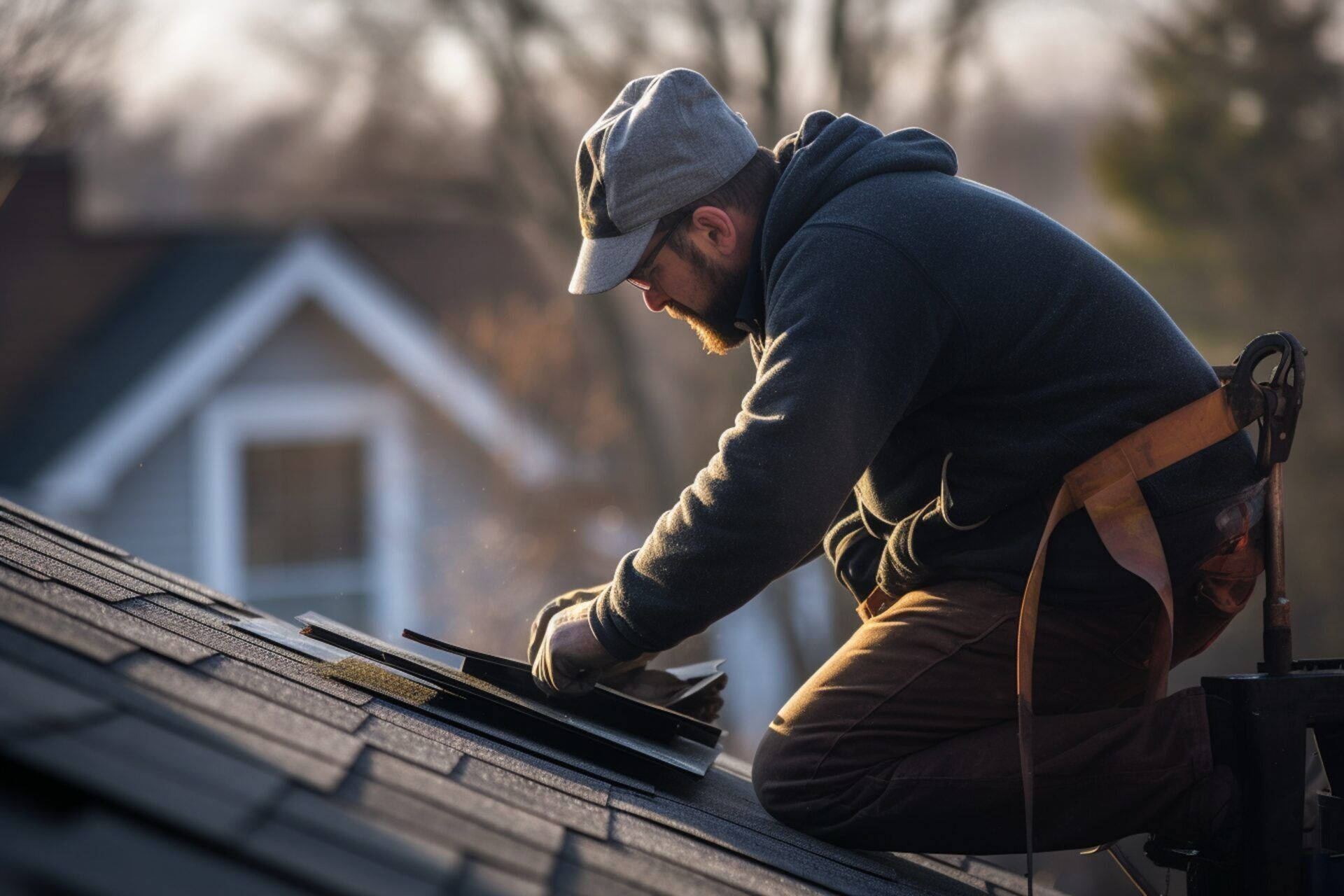
The finished covering goes on, along with flashings, valley metal, vents and edge metal. The inspection points depend on the system:
| Roof type | Code inspection points during installation |
|---|---|
| Tile, shingle, slate and similar | During installation of the covering (FBC 1512.4.2.3). Miami-Dade calls this “Tile Placing” for tile. |
| Adhesive-set or mortar-set tile | Also a field verification and static uplift test (TAS 106) before the final, to confirm tile adhesion (FBC 1512.4.2.4). The building official may require it for mechanically attached tile too. |
| Systems with a cap sheet | During installation of the cap sheet (FBC 1512.4.2.2) |
| Continuous systems (most low-slope membranes) | Before the attachment to the deck is fully covered (FBC 1512.4.3.1) |
Inspections can be combined when the contractor asks or when it is practical. That is one reason two similar houses can finish on different days.
What you do: expect less noise than at tear-off. Tile cutting is loud and dusty, though, so keep windows closed on the side where the saw is set up.
Stage 7: Final inspection
After all roofing work is done, the building official does a final inspection (FBC 1512.4.3.3). The permit isn’t closed until the final passes. If the inspector finds something, the contractor fixes it and calls for a re-inspection.
Stage 8: Cleanup and the nail sweep
The last debris goes into the container and the container is hauled away. Gutters are cleared of roofing debris, and the yard, driveway and beds are swept for nails, often with a rolling magnet.
What you do: walk the property with the foreman before the crew leaves. Check the driveway, the pool area, beds under the eaves and the street in front of the house. Nails hide in mulch and grass, so check again after the next rain or mowing.
Stage 9: Closeout paperwork
Keep a folder, paper or digital, with:
- Proof the permit was finaled. Check the permit status online yourself, not only in an email. An open permit can cause trouble when you sell or refinance.
- Warranty documents. You should have the manufacturer’s material warranty and the contractor’s written workmanship warranty, with terms. If the manufacturer requires the warranty to be registered, ask who registers it and get the confirmation. See manufacturer vs workmanship warranties.
- Product approvals and the final invoice. List the NOA or product approval numbers for what was installed.
- A wind-mitigation inspection, if useful. A new roof can change several answers on the insurer’s wind-mitigation form. Florida’s form is OIR-B1-1802, and per Citizens inspections done on or after April 1, 2026 must use the Rev. 04/26 version. Ask your insurer or agent what they need. The wind mitigation guide explains what the form covers.
Next step
If your roof is close to replacement, start with an inspection and a written, itemized estimate that names the product approvals, how extra deck work is priced and who handles each inspection. Request a free estimate, or read more about our roof replacement service.
Sources
- Florida Building Code, Building, 8th Edition (2023), Chapter 15 Roof Assemblies and Rooftop Structures (Sections 1512.4, 1524, 1525) (codes.iccsafe.org)
- Miami-Dade County: Florida Building Code Ninth (2026) Edition code change notice (miamidade.gov)
- Miami-Dade County: Standardized Private Provider Inspection Report (inspection legend, 6/24R1.0) (miamidade.gov)
- Florida Statutes (2026), s. 713.13 Notice of commencement (flsenate.gov)
- City of Coral Gables Zoning Code, Article 14 Process (Section 14-202.5) (codehub.gridics.com)
- Citizens Property Insurance: Uniform Mitigation Verification Inspection Form Changes (March 19, 2026) (citizensfla.com)