
Updated: October 20, 2026
There is no single honest number for how long a roof lasts in South Florida. Published figures depend on who wrote them and why. The national figures most people quote assume milder weather than Miami’s sun, heat, salt and storms. The table below puts four sources side by side, so you can see the range and where each number comes from.
Lifespan ranges by material, source by source
All figures are in years, copied as published. A dash means the source does not list that material.
| Material | NAHB / Bank of America study (2007, national) | InterNACHI chart (national) | InterNACHI chart for Florida homes | Fannie Mae useful-life table (2019, multifamily) |
|---|---|---|---|---|
| Asphalt shingle, architectural | 20 (“Asphalt”) | 30 | 15–20 | — |
| Asphalt shingle, 3-tab | 20 (“Asphalt”) | 20 | 10–12 | 20 |
| Metal (general) | — (copper: “Lifetime”) | 40–80 | 17–20 | 40 |
| Clay / concrete tile | ”Lifetime” | 100+ | 80+ | 40 |
| Modified bitumen | 20 | 20 | 10 | — |
| TPO | — | 7–20 | 10–12 | 20 (listed with BUR/EPDM) |
| EPDM | — | 15–25 | 10–15 | 20 (listed with BUR/TPO) |
| Built-up roof (BUR) | — (“Coal and Tar”: 30) | 30 | 5–15 | 20 (listed with EPDM/TPO) |
Sources: NAHB/Bank of America, Table 21; InterNACHI national chart; InterNACHI Florida chart; Fannie Mae Appendix F.
The InterNACHI Florida metal figure (17–20) is far below its national figure (40–80), and the chart does not explain the gap. Treat it as a conservative inspection benchmark, not a prediction for a well-chosen, maintained metal roof. The metal roofing guide covers what drives the difference near salt water.
Why the sources disagree
They are measuring different things:
- NAHB / Bank of America (2007) came from a 2006 telephone survey of manufacturers, trade associations and researchers. It gives one central national estimate and notes that “the life of a roof depends on local weather conditions, proper building and design, material quality, and adequate maintenance.”
- InterNACHI’s charts are inspection guidelines. The national chart assumes “regular recommended maintenance and conditions of normal wear and tear, and not extreme weather.” It sends Florida readers to a separate Florida chart. That chart shortens most roof lives because items “regularly exposed to saltwater, wind, sun and heat are particularly vulnerable to premature failure,” and it states that “hot climates drastically reduce asphalt shingle life.”
- Fannie Mae’s table gives standardized useful-life values for budgeting repairs on apartment buildings. It says these are “not intended to replace the professional judgment” of the assessor.
- Warranties are legal remedies, not lifespan forecasts (see below).
So a Miami homeowner should read the Florida column as the cautious end and the national columns as what the material can do in kinder conditions.
Warranty length is not lifespan
Manufacturer warranties often carry longer, more marketable numbers, but read the conditions:
- Shingles. GAF’s current shingle warranty (RESWT160L-0426, for products installed after January 1, 2025) calls its top lines “Lifetime.” That is defined as for as long as the original owner owns a single-family detached home, with a 10-year non-prorated period and declining coverage after that. It excludes damage from “inadequate ventilation” and winds above the rated speed.
- Concrete tile. Eagle Roofing’s “limited lifetime” warranty (specimen) “covers the structural integrity and specific manufacturing defects of individual roof tiles only.” Labor is covered only in the first ten years, and the warranty excludes damage from hurricanes.
- Metal finishes. PVDF finish warranties measure cracking, peeling, chalking and fading. One manufacturer’s data sheet states that products in corrosive environments, including saltwater, “do not have warranty coverage” (Metal Sales).
Tile is not the whole tile roof
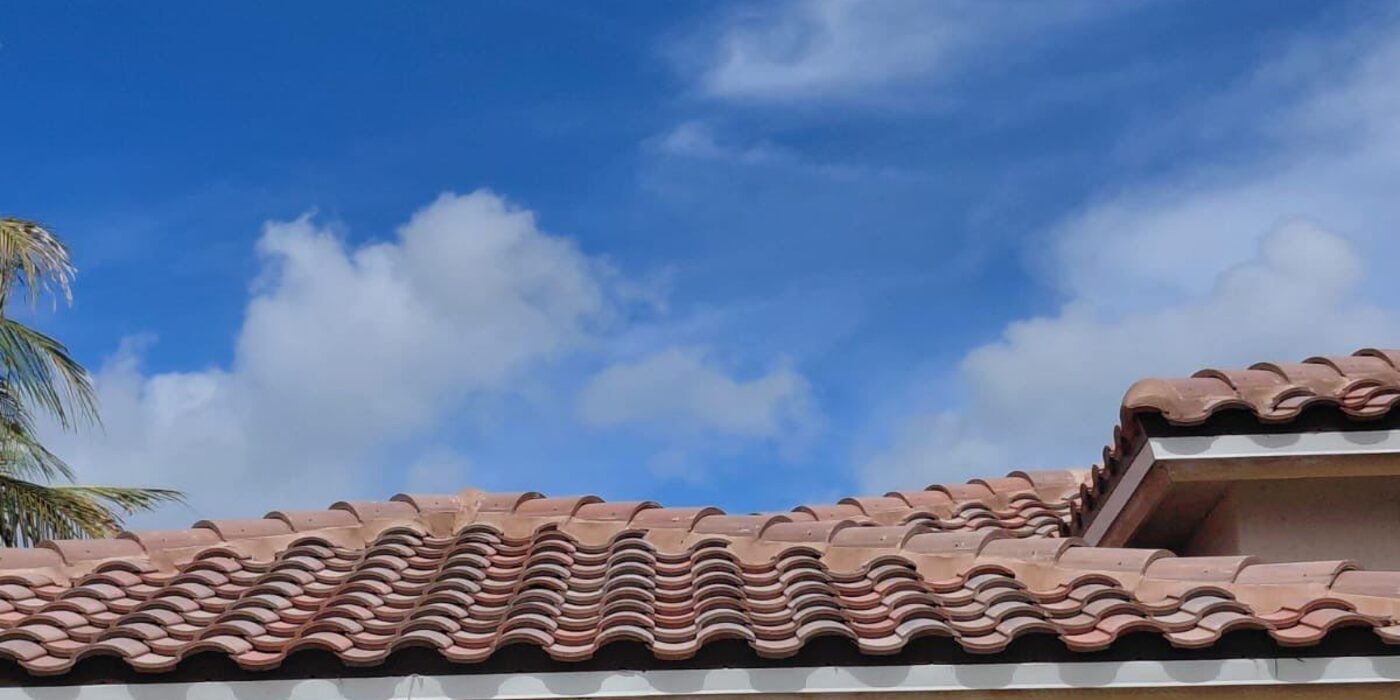
The tile figures in the table describe the tiles. A tile roof keeps water out mainly through the underlayment beneath the tiles, and none of these sources give it the same “lifetime” rating. That is why a tile roof can leak while the tiles still look fine. We explain how it happens in why tile roofs leak. Ask any inspector to assess the underlayment, not just the tile.
What shortens or extends a roof’s life here
| Factor | What the sources say | What it means for you |
|---|---|---|
| Heat and sun | ”Hot climates drastically reduce asphalt shingle life” (InterNACHI Florida). DOE notes “higher temperatures can speed up material degradation,” although more study is needed to quantify it (DOE 2010). In Florida field tests, white roofs ran about 20 °F cooler at peak than darker shingles (FSEC). | Expect shingles to sit at the low end of national ranges. Color and reflectance affect roof temperature. |
| Attic ventilation | GAF’s warranty excludes damage from “inadequate ventilation.” | Ventilation that meets the manufacturer’s instructions protects both the roof and the warranty. |
| Coastal salt | FEMA recommends exposed roof connectors and fasteners within 3,000 feet of the coastline be “hot-dipped galvanized steel or stainless steel to resist salt spray and corrosion” (FEMA P-2181). | Near the water, fasteners, clips and metal trim can fail before the roofing material does. |
| Storms | InterNACHI Florida: roofs in areas with hurricanes “may also experience a shorter-than-normal lifespan.” | A single storm can end a roof’s life early. Inspect after major wind events. |
| Installation | Every source above makes its figures depend on proper installation. In the HVHZ that means the specific approved system. | Two roofs of the same material can age very differently. |
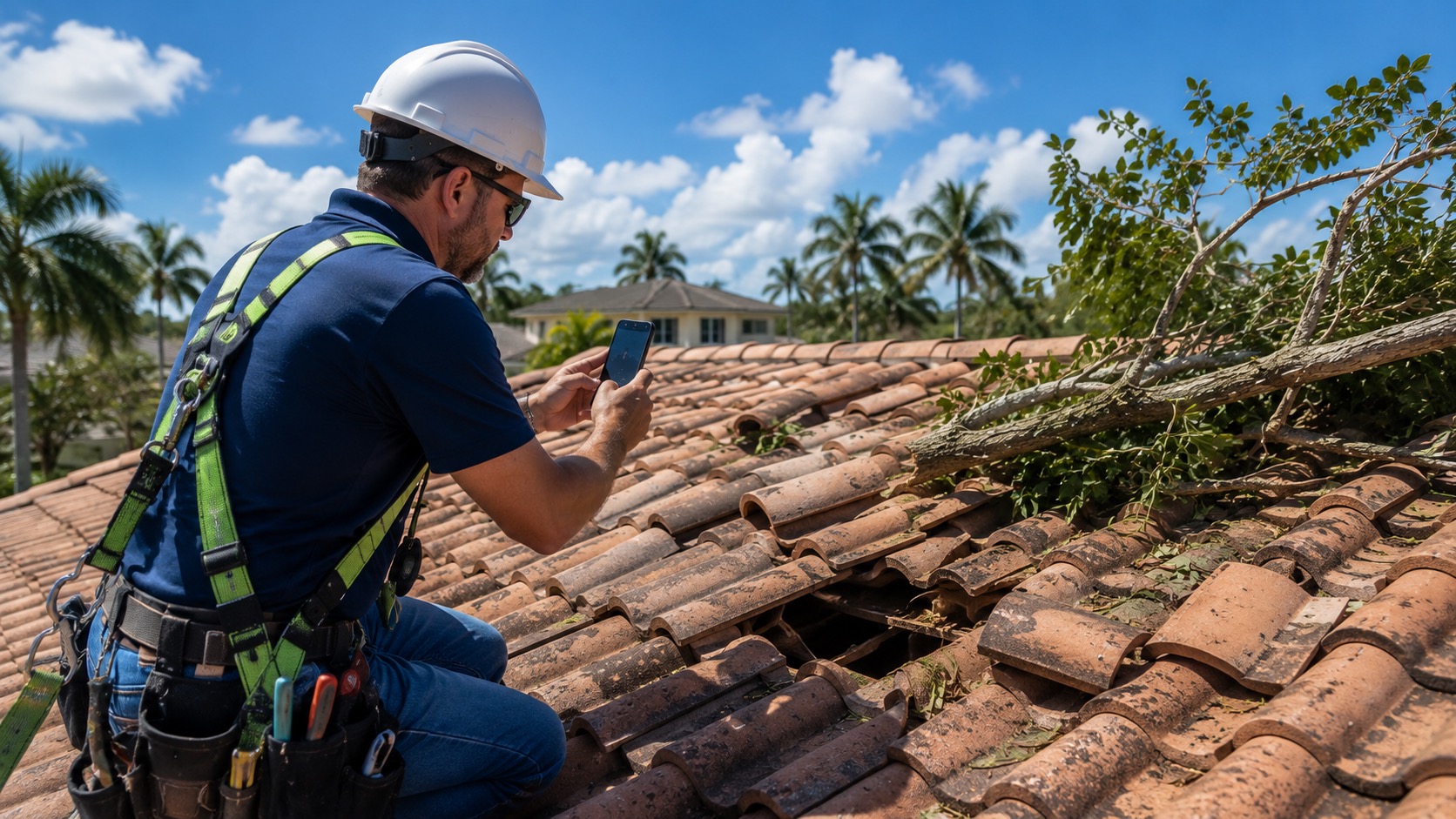
| Maintenance | InterNACHI’s figures assume “regular recommended maintenance.” | Clearing debris, keeping gutters flowing and fixing small leaks early is what lets a roof reach the range. |
How to use these numbers
- Planning a purchase or replacement: use the range, not the top figure. Ask what conditions on your house push it up or down.
- Insurance: carriers look at roof age and condition, and Florida law has specific rules here. Our guide to roof age and the “15-year rule” explains what the statute says and what carriers decide.
- Choosing a material: lifespan is one factor among cost, weight, wind approval and looks. The tile vs. metal vs. shingle comparison puts them side by side.
Next step
Age alone does not tell you how much life a roof has left. An inspection does. Art’s Roofing & Construction inspects and replaces tile, metal, shingle and flat roofs in Miami-Dade, Broward and Palm Beach. Read about roof replacement or request a free estimate.
Sources
- NAHB / Bank of America Home Equity — Study of Life Expectancy of Home Components (February 2007) (standards.nsf.org)
- InterNACHI — Standard Estimated Life Expectancy Chart for Homes (nachi.org)
- InterNACHI — Estimated Life Expectancy Chart for Florida Homes (nachi.org)
- Fannie Mae Multifamily — Form 4099.F Appendix F: Estimated Useful Life Tables (August 2019) (multifamily.fanniemae.com)
- GAF — Shingle & Accessory Limited Warranty (RESWT160L-0426) (gaf.com)
- Eagle Roofing — Transferable Limited Lifetime Product and Limited 10 Year Replacement Cost Warranty (specimen, rev. 10/30/24) (eagleroofing.com)
- Metal Sales — PVDF Coated Flat Sheet and Slit Coil product data (buildsite.com)
- U.S. DOE — Guidelines for Selecting Cool Roofs (July 2010, v1.2) (energy.gov)
- Florida Solar Energy Center — FSEC-CR-1220-00, Field evaluation of roofing systems in Ft. Myers (2002) (fsec.ucf.edu)
- FEMA P-2181 Fact Sheet 3.3.1 — Roof Systems: Sloped Roofs (March 2022) (fema.gov)