Updated: April 15, 2026
Every roof we install in South Florida has to survive UV, salt air, driving rain and 150+ mph design winds. Three systems do that well. Here’s how they really compare.
Concrete & clay tile
The Miami classic — and for good reason.
- Lifespan: 40–50+ years
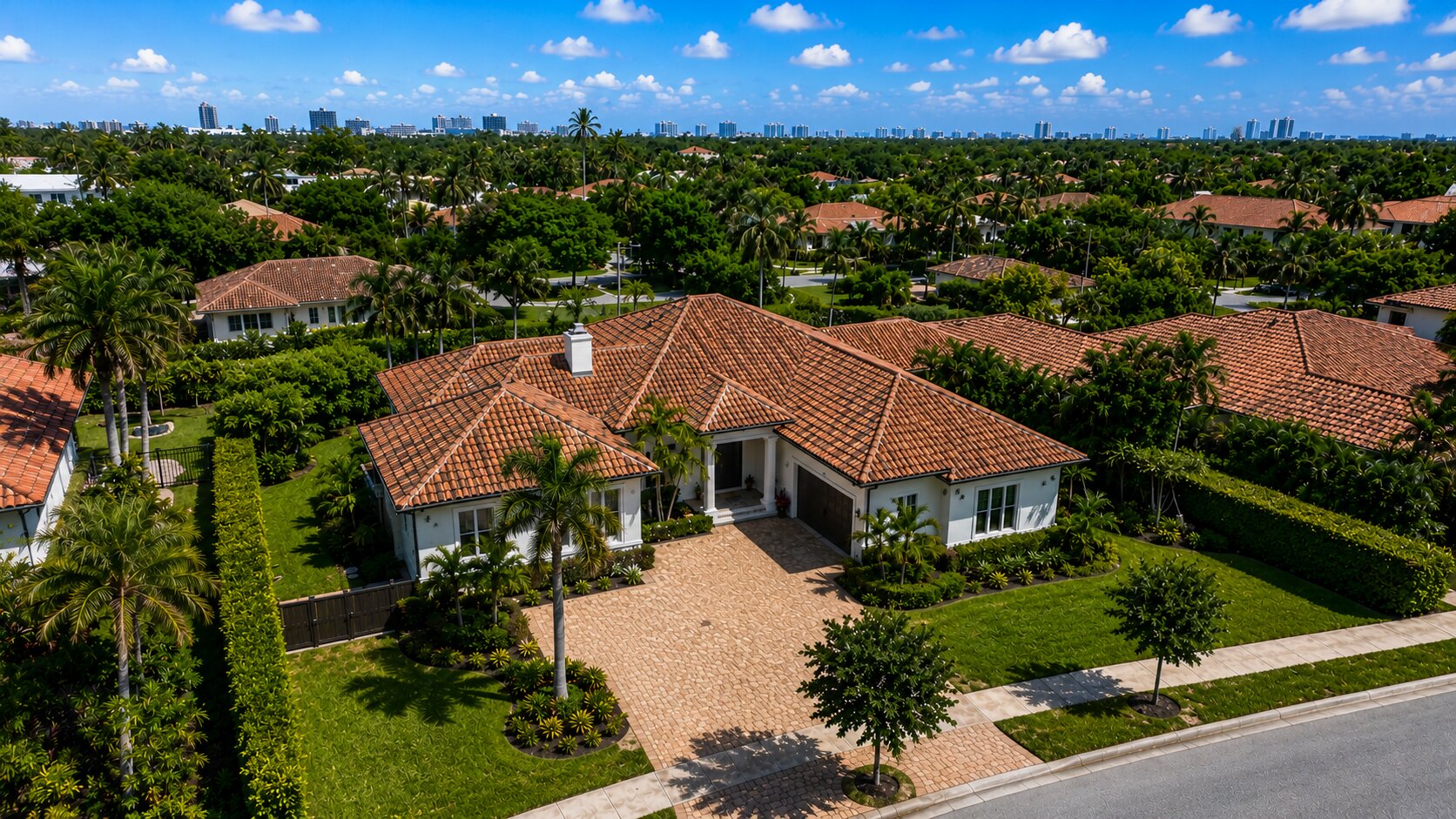
- Pros: Beautiful, fire-proof, excellent in heat, the look insurers and HOAs love.
- Cons: Heaviest option (your structure must support it), highest upfront cost, individual tiles can crack.
Best for: tile homes, Mediterranean and Spanish architecture, owners who want a “last roof.”
Standing-seam metal
The fastest-growing choice on the coast.
- Lifespan: 40–50 years
- Pros: Outstanding wind and water performance, reflects heat (lower cooling bills), hidden fasteners, clean modern look.
- Cons: Higher cost than shingle, dents from heavy impact, install quality matters a lot.
Best for: modern homes, low-slope-to-steep transitions, anyone prioritizing storm performance and energy.
Architectural shingle
The value pick that still meets HVHZ code.
- Lifespan: 20–30 years
- Pros: Lowest upfront cost, fast install, huge color range, easy repairs.
- Cons: Shorter lifespan, less heat-reflective than metal, not as premium a look.
Best for: budget-conscious replacements, rental properties, and homes where resale timeline matters more than a 50-year roof.
So which one?
If you plan to stay 15+ years, tile or metal usually wins on cost-per-year and insurance. If you need the most roof for the least money today, architectural shingle is a legitimate, code-compliant answer.
Not sure which fits your home and budget? Talk to a licensed estimator — we’ll price two options side by side so you can decide with real numbers.