
Updated: October 20, 2026
Hail large enough to damage a roof is uncommon in South Florida. The National Weather Service office in Miami says large hail, “although usually not damaging in South Florida”, can still dent vehicles and damage crops. So hail is rarely the first explanation for roof damage here, but after a storm that did drop hail, it’s worth a careful look.
How often does damaging hail fall here?
Honestly, we couldn’t find a published “hail days per year” figure for South Florida that we could verify, so we won’t invent one. What the weather service does say:
- It’s less common here than further north. An NWS Miami study of severe hail describes it as less common in the subtropical climate of South Florida than at higher latitudes.
- “Severe” starts at 1 inch. The NWS counts hail as severe at 1 inch in diameter or larger. Smaller hail is more frequent and usually does far less.
- It’s an afternoon, early-summer event. In that study’s 2000–2012 reports of 1-inch-or-larger hail, more than 70% fell between 1 and 5 p.m. and nearly 80% between May and July.
- It comes with the stormy part of the rainy season. NWS Miami lists hail among the hazards most likely from mid-May through early July.
If you’re not sure whether it hailed at your house, the weather service’s warnings at the time and your own photos of hailstones (with something for scale) are more useful than memory.
Signs of hail damage by roof type
Start from the ground. Most of the useful early clues aren’t on the roof at all.
From the ground, any roof:
- Dents in gutters, downspouts, metal vents you can see, outdoor AC units, mailboxes, cars. In IBHS’s full-scale hail test, aluminum gutters took numerous large dents.
- Shingle granules collecting at downspout outlets.
Asphalt shingle: what matters is whether an impact broke the shingle or knocked off enough granules to expose the asphalt. In IBHS’s 2013 demonstration, most impacts on standard 3-tab shingles were severe enough to count as functional damage, while impact-resistant shingles mostly showed cosmetic marks, with a few punctures. IBHS research also suggests that frequent small hail, under 1 inch, can strip granules and quietly age a shingle roof over time, without one dramatic storm.
Metal: dents. In the same IBHS demonstration, the standing-seam metal sections showed visible dents but no punctures, which IBHS classed as cosmetic. Whether cosmetic dents matter for a claim depends on your policy wording, so ask.
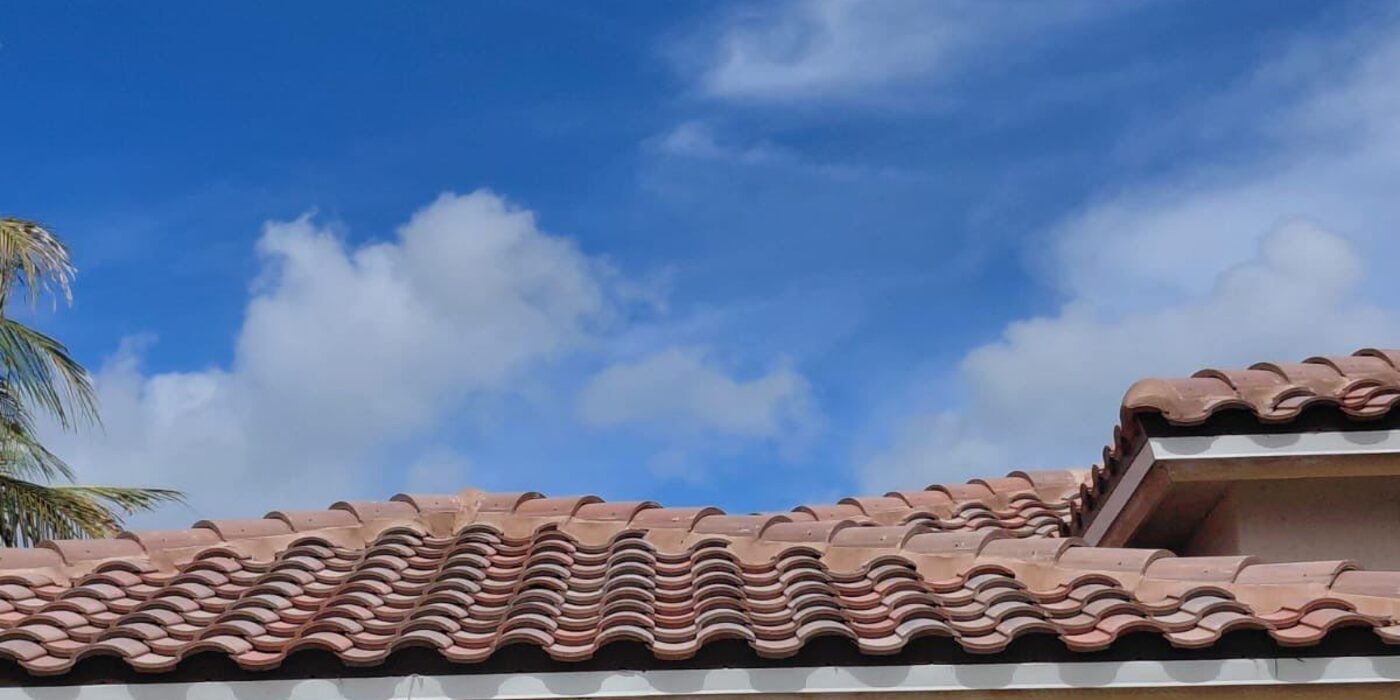
Tile: cracked or broken tiles. We found no South Florida–specific research on hail and tile, and a cracked tile can just as easily come from foot traffic, falling limbs or age. Telling them apart takes a close look at the break.
Flat and low-slope: punctures or bruising in the membrane and damage at seams and edges, which can only be judged up close.
The limits of diagnosis
Hail damage is easy to over-call and easy to miss.
- From the ground, you can only see clues. Dented gutters show that hail fell; they don’t prove the roof covering was damaged.
- Other things look like hail marks. Blistering, normal granule wear, foot traffic, debris and manufacturing marks can all resemble impacts. IBHS notes that real hail impacts tend to be random in pattern; damage lined up along a path, or limited to one spot, may well have another cause.
- Cosmetic vs functional. A dent that doesn’t affect how the roof sheds water is treated differently from a fracture or puncture that does. That distinction is at the center of most hail disputes.
- Old vs new. Without dated photos of the roof before the storm, it can be hard to show when damage happened.
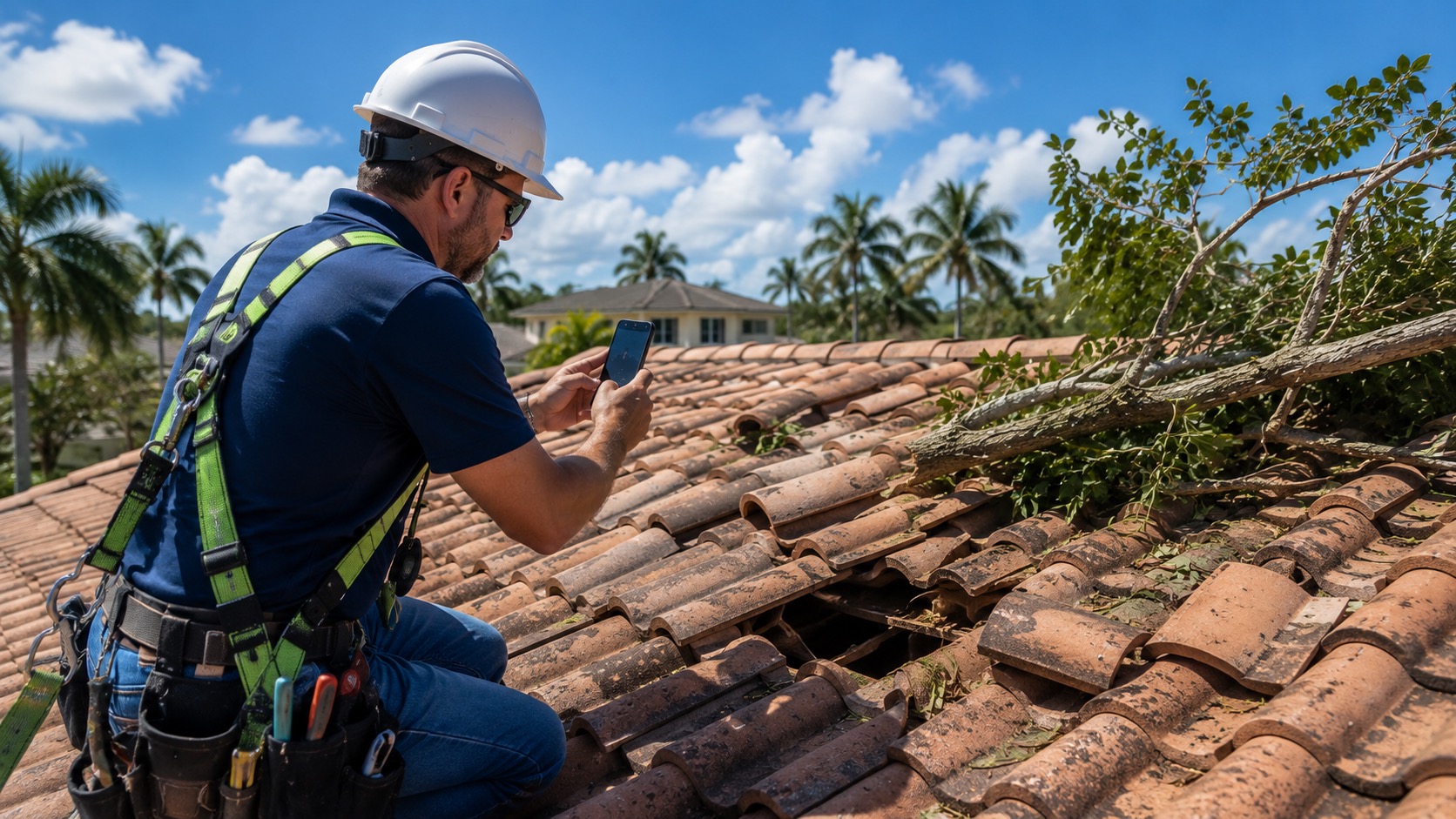
And stay off the roof to look for it yourself. Up close is a job for a roofer with fall protection.
When to get an assessment
Have the roof looked at if:
- hail of roughly 1 inch or larger fell at your address, or a severe thunderstorm warning mentioned hail;
- you see dented gutters or vents, or granules piling up at the downspouts;
- a new leak or ceiling stain appears after the storm;
- you’re thinking about filing a claim and want to know whether there’s functional damage first.
Photograph the hail and the dents with a date, then follow our after-the-storm guide for the rest of the record. Hail that falls in an ordinary thunderstorm, outside a hurricane, usually falls under your regular deductible rather than the hurricane deductible; our comparison of afternoon storm and hurricane damage explains the difference. For what a full inspection covers, see the roof inspection guide.
Next step
If hail hit your area and you see the signs above, have a roofer confirm what’s functional damage and what isn’t before you decide anything. Art’s Roofing & Construction (Florida licenses CCC1333598 and CGC1541858) inspects and repairs roofs across Miami-Dade, Broward and Palm Beach. See our roof repair service or request a free estimate.
Sources
- 2025 Severe Weather Awareness Week — Tornado and Thunderstorm Awareness Day (NWS Miami–South Florida) (weather.gov)
- Predicting Severe Hail Events in South Florida (NWS Miami, 2013) (weather.gov)
- Rainy Season 2025 Outlook (NWS Miami–South Florida) (weather.gov)
- NWS Glossary — Severe thunderstorm (forecast.weather.gov)
- IBHS Hailstorm Demonstration Results (February 2013) (ibhs.org)
- Impact Testing of High Concentrations of Small Hail — IBHS (ibhs.org)