Updated: April 28, 2026
The roofs that last longest in South Florida aren’t always the most expensive — they’re the ones that get looked after. A little routine attention is the cheapest roofing you’ll ever buy. Here’s the checklist we give our clients.
Twice a year (spring and fall)
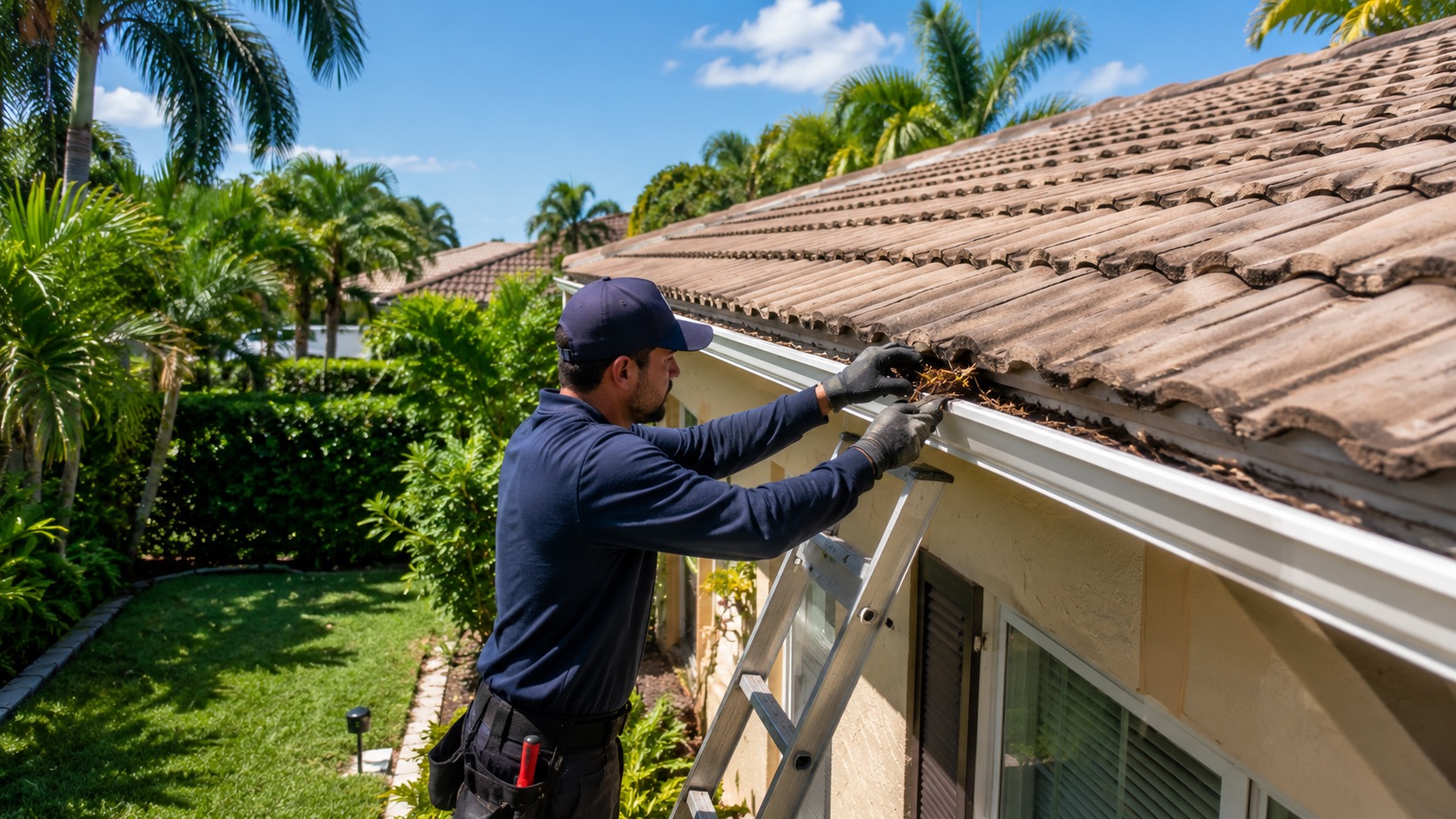
- Clear the gutters and downspouts. Clogged gutters back water up under the edge of the roof — a leading cause of fascia rot in Florida.
- Trim overhanging branches. Limbs scrape the surface and drop debris; they also become projectiles in a storm.
- Look for displaced shingles or tiles. Wind lifts and slips them; spotting it early turns a replacement into a quick repair.
- Check the flashing. Around vents, skylights, chimneys and valleys — these metal details are where most leaks begin.
- Clear roof debris. Leaves and seed pods trap moisture against the surface and accelerate aging.
After every major storm
- Walk the property and look up — note any missing pieces, debris, or dented metal.
- Check ceilings and the attic for fresh water stains.
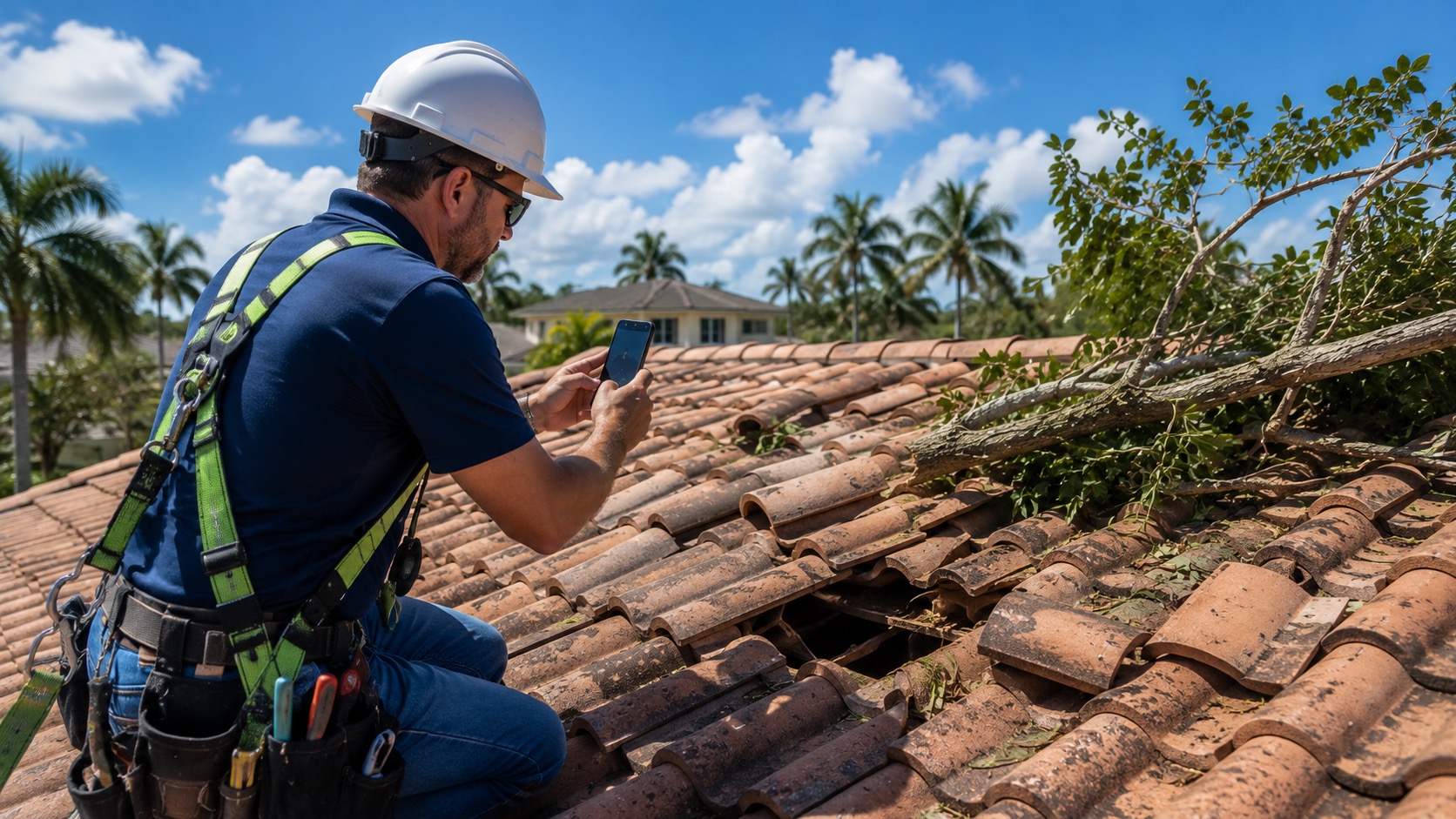
- Photograph anything you find, with the date, in case you need an insurance claim later.
Watch the attic year-round
Your attic tells on your roof before the ceiling does. Watch for:
- Damp insulation or a musty smell
- Daylight through the deck
- Rusty nail tips (a sign of condensation or a slow leak)
What to leave to a pro
Walking a tile or steep roof is genuinely dangerous, and Florida tile cracks under careless foot traffic. Skip the DIY climb — a professional inspection finds the subtle failures (worn underlayment, hairline flashing gaps) that you can’t see from the ground.
Why it pays off
In Florida’s sun, heat and humidity, a maintained roof can outlast a neglected identical one by years — and a documented maintenance history is exactly what defeats the “wear and tear” denial when you do file a claim.
Want a professional set of eyes before storm season? Book a free roof inspection — we check everything on this list and send you photos.